- Saudi Arabia
- Egypt
- Qatar
- United Arab Emirates
October 29, 2026
Share


Last updated: 29/10/2026
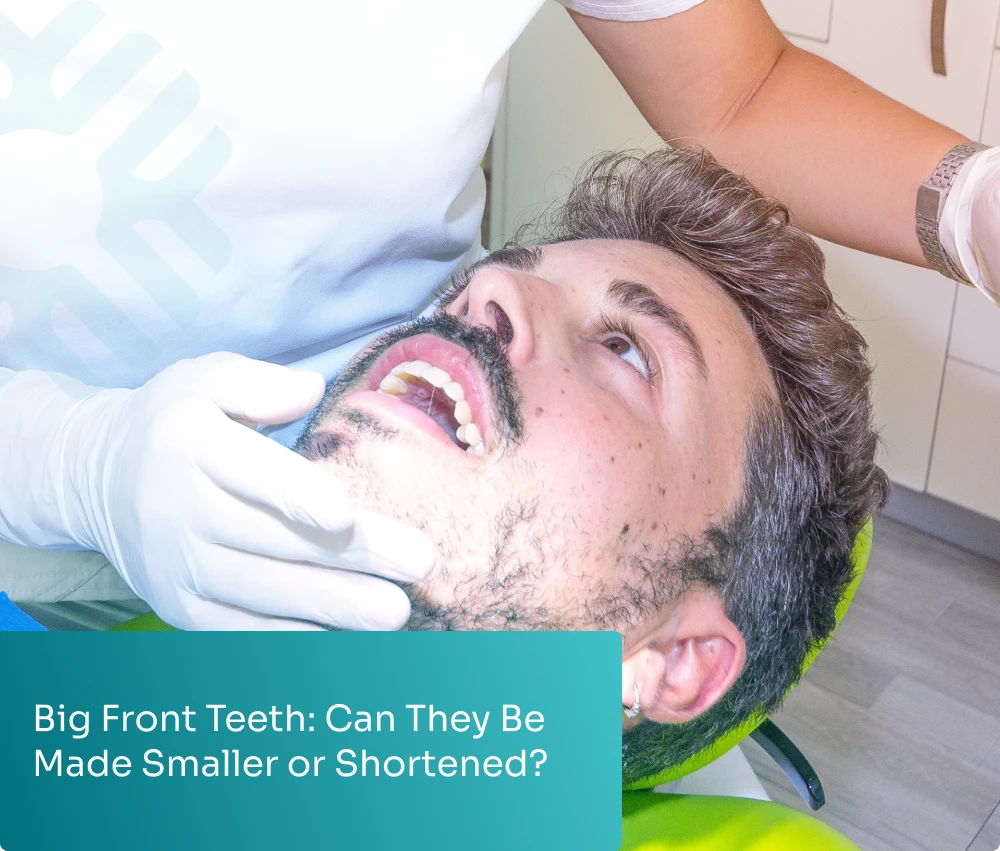
Front teeth shaving is a conservative cosmetic dental procedure used to correct small differences in tooth shape, length, or edges by removing a limited and carefully planned amount of enamel. A dentist may consider it when one front tooth is slightly longer than the teeth beside it, when an edge is uneven, or when a minor bump affects the appearance of the front teeth.
The decision should not be based on appearance alone. Enamel thickness, tooth and gum health, the bite, and the amount of change needed should be assessed before any enamel is removed, because enamel that is removed does not grow back.
In short: front teeth shaving means removing a small amount of enamel to correct minor differences in tooth length, edges, or shape. It is intended for limited changes only. Because removed enamel cannot be restored naturally, the procedure should be preceded by an assessment of enamel thickness, bite, and tooth health.
Have a question about front teeth shaving? Contact the Magrabi Health dental team on WhatsApp to ask about an appropriate assessment and the next step for your case. Chat with Magrabi Health on WhatsApp
Teeth shaving, also called tooth reshaping, is a limited adjustment of the enamel surface to improve the shape, length, or edges of a tooth. Medical terms for this procedure include enameloplasty and tooth contouring. It does not mean removing a large part of the tooth; it is a conservative option for selected cases that can be improved with a small, controlled adjustment.
Front teeth shaving may be one of the options a dentist discusses when assessing Cosmetic Dentistry at Magrabi Health, depending on the amount of change required, enamel condition, bite, and overall oral health.
Teeth shaving may be suitable when the concern is minor and can be improved by removing a small amount of enamel without compromising the tooth or the bite. Suitability is determined after an examination, not simply by comparing your teeth with photographs or other people’s results. Shaving down front teeth is only considered when a small, measured change can be made without compromising enamel or bite.
Shaving long front teeth may be considered when one or more teeth are only slightly longer than the neighboring teeth and there is enough enamel for a safe adjustment. Larger differences in length or size may require another approach so that too much enamel is not removed.
A limited adjustment may help smooth a rough or uneven edge or reduce a small contour irregularity. If the tooth needs material added rather than enamel removed, the dentist may discuss cosmetic bonding or another restorative option instead.
Front teeth reshaping may not be appropriate when enamel is thin, when a major change is needed, or when another dental problem should be treated first. Situations that need a different assessment include:
If your goal is to improve tooth shape or smile symmetry, explore Cosmetic Dentistry at Magrabi Health to learn about the options a dentist may compare after examination and how the most appropriate plan is selected for your teeth.
The decision is based mainly on four factors: the amount of change needed, enamel thickness, the bite, and the health of the tooth and gums. If the desired change is greater than the enamel can safely allow, a dentist may recommend another option instead of removing more enamel.
The exact technique varies according to the tooth and the amount of reshaping required, but front teeth shaving usually follows three main stages.
The dentist examines the teeth and gums and identifies the area that may be adjusted. Tooth length and the way the teeth meet when you bite are also reviewed. Dental X-rays may be requested when more information about tooth structure or roots is needed, but they are not mandatory for every minor cosmetic case.
The dentist uses specialized dental instruments to remove a small, measured amount of enamel from the planned area. The goal is to improve shape while preserving as much tooth structure as possible, not to make every tooth the same length or shape.
Once the planned shape is achieved, the edges are smoothed and polished. The bite is then checked to make sure the adjustment has not changed how the teeth meet. Follow-up may be recommended if sensitivity or an unusual bite sensation develops.
The appearance of teeth shaving before and after treatment depends on how much enamel can be adjusted safely. The shape of the teeth after shaving therefore varies from one person to another, and photographs of another patient cannot predict an identical result.
Front teeth shaving is intended to be a conservative procedure when it is used for a suitable case and performed within safe limits. Removing too much enamel, however, can increase teeth shaving risks such as sensitivity and may make the tooth more vulnerable to future problems.
Sensitivity to hot or cold temperatures may occur in some people, especially if the teeth were already sensitive or the adjustment was close to the available enamel limit. Severe or persistent sensitivity should be assessed by a dentist.
Enamel does not contain living cells that can rebuild the part that has been removed. Excessive enamel removal may reduce the tooth’s protective layer and increase the risk of sensitivity, wear, decay, or fracture. Conservative planning is therefore essential.
Tooth shape affects more than appearance. Edge length and tooth contacts also influence how the bite functions. Poorly planned reshaping may make the teeth feel as though they no longer meet normally or may cause discomfort when biting.
The outer enamel layer does not contain nerves, so limited enameloplasty may not require anesthesia in many cases. This cannot be generalized to everyone, because the need for anesthesia depends on the extent of treatment, tooth sensitivity, and any other procedures performed during the same visit.
Mild, temporary sensitivity may occur afterward. Severe pain after teeth shaving, sensitivity that persists or worsens, or a noticeable bite change should be assessed by a dentist.
Minor cosmetic teeth contouring usually does not require a long recovery period. Daily care can help protect the remaining enamel and maintain oral health.
Unexpected symptoms should be assessed rather than ignored or corrected at home. Contact a dentist if you notice:
No. You should not shave your teeth at home or use a nail file or another non-dental tool. Enamel removal cannot be reversed, and uncontrolled shaving may cause sensitivity, alter tooth shape or bite, or expose deeper tooth layers. A dentist should determine how much enamel can be adjusted and use appropriate instruments.
Cosmetic teeth shaving usually removes a small amount of enamel to make a limited change in tooth shape or length. Preparing a tooth for a crown has a different purpose: it creates the shape and space needed for the restoration and may require a different amount of tooth preparation depending on the condition of the tooth and the type of crown.
For more information about crowns and restorative planning, see Prosthodontics at Magrabi Health.
The terms teeth shaving, tooth contouring, teeth contouring, tooth reshaping, and enameloplasty can overlap in everyday dental use. In this article, front teeth shaving refers specifically to conservative enamel reduction used to make a limited change to the surface or edge of a front tooth.
For a broader overview of tooth reshaping and other cosmetic options, visit Cosmetic Dentistry at Magrabi Health.
Yes. Cosmetic shaving is used to make a limited change to tooth shape or length. In orthodontics, a dentist or orthodontist may remove a carefully measured amount of enamel between selected teeth to create space for tooth movement. This is known as interproximal reduction, or IPR.
To understand when space creation may be part of orthodontic treatment, learn more about Orthodontics at Magrabi Health.
The most appropriate alternative depends on the cause of the concern, not only on the desired appearance. A slightly long tooth may need a conservative adjustment, while protruding or crowded teeth may require orthodontic treatment. Some shape concerns are better managed by adding restorative material rather than removing enamel.
|
If the main concern is… |
A dentist may discuss… |
|
A minor difference in one tooth edge or length |
Conservative cosmetic teeth shaving |
|
The tooth needs material added or its shape changed without more enamel removal |
Cosmetic bonding |
|
Protruding, crowded, or misaligned teeth |
Orthodontic treatment |
|
A larger change in shape or color, with a cosmetic or restorative need |
Veneers or another suitable cosmetic restoration after assessment |
|
A tooth needs preparation for a crown |
Crown preparation, which is different from cosmetic teeth shaving |
Tooth appearance alone does not determine the best option. Enamel thickness, bite, tooth health, and the amount of change required all influence the treatment plan.
When the concern involves tooth size or overall smile proportions, Cosmetic Dentistry at Magrabi Health can provide a broader view of the reshaping and restorative options a dentist may consider.
There is no single teeth shaving cost that applies to every case. The cost may vary according to the number of teeth being reshaped, the amount of adjustment required, any additional examinations, dental treatment needed before the cosmetic procedure, and whether shaving is combined with bonding or another treatment. A more accurate estimate can be provided after examination and treatment planning.
For a professional assessment before front teeth shaving, you can book an appointment with Magrabi Health or call the Contact Center on 920018000 to choose a suitable appointment.
Front teeth shaving can be a conservative option for small differences in tooth length, edges, or contour when enamel thickness and the bite allow it. Because removed enamel does not grow back, treatment should begin with an examination and a clear limit on how much change can be made safely. Orthodontics, cosmetic bonding, veneers, or another restorative option may be more appropriate when a larger change is needed.
Medical review: Dr. Ahmed El Tokey - Orthodontics and Cosmetic Dentistry, Magrabi Health.
Medical Disclaimer: The information in this article is for health education purposes only and does not replace a visit to a doctor or consultation with a qualified specialist. Magrabi Health recommends seeing a dentist for an accurate assessment and to determine the most appropriate option for your case.
The Magrabi Health Editorial Team creates educational medical content designed to help readers better understand symptoms, diagnostic tests, treatment options, and preventive healthcare measures across a wide range of medical topics, drawing on trusted sources and specialized clinical expertise. Since 1955, Magrabi Health has built more than 70 years of experience in specialized healthcare through a regional network of over 40 facilities across 5 countries. Its commitment to quality and patient safety is reflected in numerous accreditations and recognitions, including the designation of several eye centers as Centers of Excellence in Ophthalmology by the Surgical Review Corporation (SRC). This content is intended for educational purposes only and should not be considered a substitute for professional medical advice, diagnosis, or treatment.
Front teeth shaving is a conservative cosmetic dental procedure used to correct small differences in tooth shape, length, or edges by removing a limited and carefully planned amount of enamel.
Teeth shaving may be suitable when the concern is minor and can be improved by removing a small amount of enamel without compromising the tooth or the bite.
The risks include tooth sensitivity, removing too much enamel which can increase vulnerability to future problems, and changes in tooth shape or bite.
Limited enameloplasty may not require anesthesia in many cases, but the need for anesthesia depends on the extent of treatment and tooth sensitivity.
After teeth shaving, daily care includes brushing twice a day, cleaning between teeth, avoiding hard objects, and attending routine dental check-ups.
No, you should not shave your teeth at home or use non-dental tools, as uncontrolled shaving may cause sensitivity or alter tooth shape.