- Saudi Arabia
- Egypt
- Qatar
- United Arab Emirates
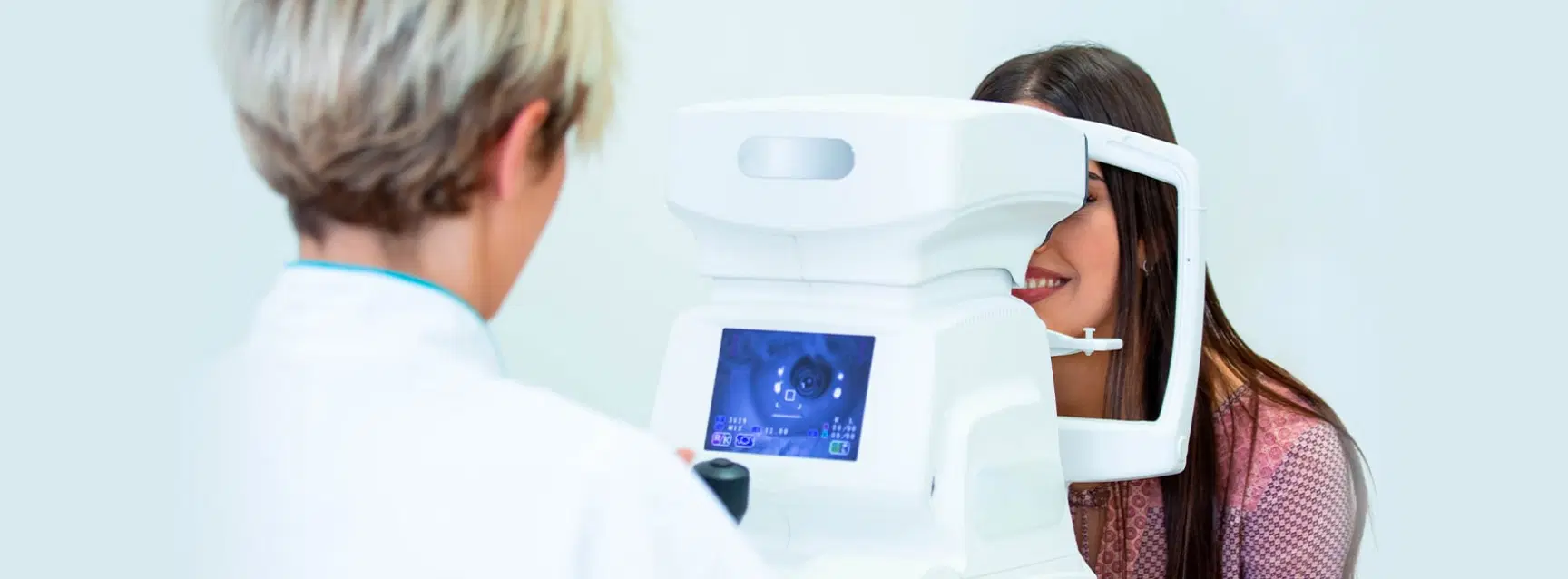
If you notice that your child brings objects close to their face, closes one eye while looking, tilts their head while watching TV, has a visible squint, or there is a suspicion of weak vision, a lazy eye examination for children may be an important step to check how your child’s vision is developing.
Lazy eye in children may not always be obvious to parents, because the child may rely on the stronger eye without complaining of poor vision in the other eye. For this reason, the right decision starts with a detailed medical examination that evaluates vision, identifies the cause, and determines the suitable plan for lazy eye treatment for children according to the child’s age and examination results.
This treatment journey is supported by the experience of the Magrabi Health network in eye care, which extends across more than 200,000 surgical procedures annually within its network, with a clear commitment to quality and patient safety standards, including Magrabi Health Riyadh’s JCI accreditation with a 99.5% evaluation score.
Speak with a Magrabi Health advisor on WhatsApp to help you choose the right eye test for your child.
Lazy eye in children, also known as amblyopia, is poor development of vision in one eye in many cases. It may happen when the brain does not receive a clear image from the affected eye during the stage of visual development.
Lazy eye may be linked to a difference in prescription between the two eyes, squint, or another issue that affects visual clarity. In many cases, the child cannot describe the problem clearly, so an eye examination is the most important way to detect the condition and determine the suitable plan.
The earlier the problem is noticed, the easier it becomes to evaluate the case and start a suitable treatment plan determined by the children’s eye doctor.
A lazy eye examination may be suitable if the child has weak vision, squint, a clear difference in vision between the two eyes, or if parents notice unusual visual behavior. The examination may also be important if there is a family history of vision problems, squint, or lazy eye.
According to the Saudi Ministry of Health, a child needs medical evaluation if:
Medical note: Lazy eye cannot be confirmed, and the suitable treatment cannot be chosen based on symptoms alone. The children’s eye doctor determines the decision after checking vision, evaluating both eyes, and identifying the cause affecting visual development.
According to the guidelines of the Egyptian Ministry of Health, the examination aims to identify the level of vision in each eye and determine the cause that may prevent the eye from developing normal vision. The examination method varies depending on the child’s age and ability to cooperate, but the basic steps are clear and simple.
The doctor checks eye alignment and movement to see whether there is a squint or imbalance affecting vision.
Lazy eye may occur because of a difference in prescription between the two eyes, so accurate measurement helps determine whether eyeglasses are necessary.
The doctor examines the parts of the eye to make sure there is no other problem affecting visual clarity.
After the examination, the doctor explains the cause of lazy eye or suspected lazy eye and determines the suitable plan and required follow-up.
[Book an eye test for your child through the booking form]
Lazy eye treatment for children depends on the child’s age, degree of weak vision, cause of lazy eye, presence of squint, presence of a difference in prescription between the two eyes, and the child’s response to treatment and follow-up.
The treatment plan may include one or more of the following options according to the doctor’s assessment:
If lazy eye is linked to nearsightedness, farsightedness, astigmatism, or a difference in prescription between the two eyes, treatment may begin with eyeglasses to help the eye receive a clearer image.
In some cases, the doctor may recommend covering the stronger eye for specific periods to encourage the weaker eye to work and improve its use. The duration and method of patching are determined only by the doctor according to the child’s condition.
Some cases may be suitable for alternatives to patching or different treatment steps, depending on the child’s age, the cause of lazy eye, and treatment adherence.
If lazy eye is linked to squint or another eye problem, the child may need a broader plan that treats the underlying cause along with improving vision.
Lazy eye treatment needs continuous follow-up because the doctor measures improvement and adjusts the plan when needed. Commitment to appointments and instructions helps evaluate the child’s response better.
Important: There is no single plan that suits all children. Lazy eye treatment for children is determined by the doctor after examination, and eye patching or any treatment should not be used without medical guidance.
Choosing the right place for a lazy eye examination in children does not depend only on the availability of the test. It also depends on having a clear pathway that starts with accurately assessing the child’s vision, understanding the cause of weak vision, then setting a treatment and follow-up plan that suits the child’s age, condition, and the guidelines of the Ministry of Public Health in Qatar.
At Magrabi Health, the children’s eye care and squint experience helps you make a more reassuring decision through:
Ask on WhatsApp about a lazy eye examination for your child
The decision to treat lazy eye in children does not depend only on noticing weak vision. It requires a detailed assessment of the child’s vision, measuring visual acuity in each eye, checking for a difference in prescription, evaluating squint if present, and identifying the cause that affects visual development. For this reason, the right step starts with a children’s eye examination that determines whether the child needs eyeglasses, eye patching, regular follow-up, squint treatment, or another plan decided by the doctor after examination.
You can contact us via WhatsApp to be guided to the nearest suitable branch and the most suitable appointment to start a lazy eye examination for children with confidence and clarity.
Choose the nearest branch from the Magrabi Health branches in Saudi Arabia page, then confirm the availability of children’s eye testing, lazy eye assessment, vision measurement for children, squint assessment, or lazy eye treatment follow-up before booking:
You can visit the Magrabi Health branches in Saudi Arabia page and search by city to choose the nearest branch, then contact us to confirm the availability of children’s eye testing or lazy eye treatment options for children, and to know whether your child needs eyeglasses, eye patching, regular follow-up, squint assessment, or another treatment step decided by the doctor after examination.
Choose the nearest branch from Magrabi Health branches in Egypt, then ask about the availability of children’s eye testing, lazy eye assessment, vision measurement for children, squint assessment, or lazy eye treatment follow-up services before booking an appointment:
You can visit the Egypt branches page and search for the nearest suitable branch for children’s eye testing, or contact us to ask about the availability of lazy eye assessment for children and the suitable doctor before booking.
Choose the Magrabi Health branch in Qatar to ask about children’s eye testing and lazy eye assessment and follow-up services for children:
You can visit the Qatar branch page to know the branch details, address, and working hours, then contact us to confirm the availability of children’s eye testing, lazy eye assessment, vision measurement, squint assessment when needed, or the suitable appointment for your child.
Patient reviews help parents understand the experience of children’s eye testing and lazy eye follow-up for children, including ease of booking, how the team deals with the child, clarity of the doctor’s explanation to parents, organization of tests, and how treatment options are explained, such as eyeglasses, eye patching, squint treatment if present, or regular follow-up depending on the case.
Mohammed Al Anzi
★★★★★ – 6 months ago
We visited Magrabi Health after noticing that our child was bringing objects close to his face and tilting his head while watching TV. The examination experience was organized and clear, and the doctor explained the importance of vision measurement and lazy eye assessment in children before determining the suitable plan. The branch team was also cooperative and made the appointment and follow-up process easier.
Reem Al Subaie
★★★★★ – 8 months ago
I needed an eye test for my child because there was a suspicion of lazy eye. After the evaluation at Magrabi Health, we received a clear explanation of the condition and the suitable treatment options. I appreciated the doctor’s care in answering questions and explaining the role of eyeglasses, eye patching, and follow-up according to the child’s needs.
Hind Al Mutairi
★★★★★ – 2 years ago
I visited Magrabi Health because I was worried about my daughter’s weak vision and a clear difference between her eyes while focusing. The examination experience was comfortable and organized, and the doctor explained the vision measurement results and the squint and lazy eye assessment in a clear and understandable way, which helped me understand the suitable treatment step.
Salman Al Ghamdi
★★★★★ – 3 years ago
Excellent service and well-organized appointments. The children’s eye examination was coordinated smoothly, and the doctor was keen to explain the cause of lazy eye and whether the case needed eyeglasses, eye patching, or regular follow-up. This gave us reassurance before starting the treatment plan.
Turki Mutairi
★★★★☆ – 2 years ago
A center specialized in treating eye problems with experienced doctors. My child’s lazy eye examination experience was good, and the condition was explained in a simple way, including the difference between vision testing, squint assessment, treatment follow-up, and the steps needed to monitor improvement over time.
Before visiting the children’s eye doctor, a few details may help the doctor understand the case better.
It is recommended to prepare the following information:
Ask on WhatsApp before your child’s appointment
If you are reading about lazy eye in children, these pages may help you understand the services related to the condition and choose the right pathway:
Strabismus Treatment for Children
Speak with a Magrabi Health advisor on WhatsApp
If you suspect that your child has a lazy eye, or if you notice any symptom of lazy eye in children, do not wait until the problem becomes clearer. A medical examination is the step that helps identify the vision condition, the cause of weakness, and the suitable plan for lazy eye treatment for children.
Speak with a Magrabi Health advisor on WhatsApp, book an examination appointment through the form, or call us, and you will be guided to the suitable branch or appointment according to your child’s case.0
Maghrabi Health experts reaffirm the importance of visiting a specialized hospital for regular eye exams, which contribute to early detection of eye diseases through accurate diagnosis, allowing for successful treatment plans that minimize potential side effects or complications. Book your medical consultation now at Maghrabi Health with a selection of the best keratoconus specialists in the Middle East and North Africa.
Lazy eye in children, also known as amblyopia, is a condition where vision in one eye does not develop properly. This often occurs when the brain does not receive a clear image from the affected eye during visual development.
Signs that may indicate a need for a lazy eye examination include visible squinting, tilting the head while focusing, bringing objects close to the face, or a noticeable difference in vision between the two eyes. If there is a family history of vision problems, this may also warrant an examination.
A lazy eye examination involves several steps, including measuring vision in each eye, checking for squint or misalignment, and evaluating the difference in prescription between the eyes. The examination method is tailored to the child's age and ability to cooperate.
Treatment options for lazy eye may include eyeglasses to correct refractive errors, patching the stronger eye to encourage use of the weaker eye, or other methods as determined by the doctor. The specific treatment plan depends on the child's age, the cause of lazy eye, and their response to treatment.
The duration of lazy eye treatment varies based on factors such as the child's age, the severity of the condition, and adherence to the treatment plan. Regular follow-up appointments are essential to monitor progress and make necessary adjustments.
The cost varies according to the examination, cause of lazy eye, need for eyeglasses, number of follow-up visits, and the presence of squint or another problem. The plan and expected cost are determined after the doctor’s assessment.

