- Saudi Arabia
- Egypt
- Qatar
- United Arab Emirates
November 2, 2026
Share


Last updated: 1/11/2026
Dental laminates are used to improve the color, shape, or harmony of the teeth in selected cases, such as certain types of discoloration, minor fractures, and limited gaps between teeth. They are thin cosmetic shells attached to the front surface of the teeth and can be made from porcelain or composite resin materials according to the needs of each case.
However, choosing dental laminates is not based on appearance alone, and no single type is suitable for everyone. Before making a decision, the dentist needs to assess the health of the teeth and gums, the available amount of enamel, tooth position and bite, as well as the amount of change required. The need for tooth shaving or preparation also varies according to the type of laminate and the clinical case, so prior assessment helps select the most appropriate option while preserving dental health.
Are you considering dental laminates and want to know the appropriate next step for your case? Contact Magrabi Health on WhatsApp to ask about the Hollywood Smile service.
Dental laminates are thin shells attached to the front surface of the teeth to improve their color, shape, or visible size. They may be made from porcelain or composite resin. They differ from dental crowns, which cover a larger portion of the tooth, and they do not treat tooth decay or gum disease, so any health problem should be treated before the cosmetic procedure.
No single type of dental laminate is suitable for everyone. The choice depends on the health of the teeth and gums, the amount of enamel, the bite, the original tooth color, and the amount of change required. Some cases may need limited preparation, while minimal-prep dental laminates may be used in other cases.
If you would like to learn about cosmetic options that may suit your case, you can view the Hollywood Smile service at Magrabi Health and learn about veneers, laminates, teeth whitening, cosmetic fillings, and other options selected by the dentist after the examination.
No. Dental laminates and a Hollywood Smile are not necessarily the same term. Dental laminates are a specific cosmetic procedure that uses thin shells placed on the front surface of selected teeth to improve color, shape, or harmony.
A Hollywood Smile, on the other hand, describes a plan aimed at improving the overall appearance of the smile. It may include dental laminates or veneers, but it may also include other procedures according to the person’s needs, such as teeth whitening, cosmetic fillings, gum treatment, or correction of certain dental problems before the cosmetic stage.
Simply put, dental laminates can be part of a Hollywood Smile plan, but they are not the only option used to achieve it. The plan therefore varies from one person to another according to tooth color, shape, position, gum health, and the desired result.
For this reason, planning begins with an examination of the teeth and identifying the problems that need improvement, rather than assuming that placing laminates alone is the right solution for everyone who wants to change the appearance of their smile.
For a detailed comparison, read the difference between dental laminates and a Hollywood Smile.
Porcelain and composite resin are the most common materials used for dental laminates, and minimal-preparation options are also available in selected cases. No single material can be described as best for everyone, because the choice depends on the condition of the teeth, the desired result, and the acceptable amount of preparation.
| Type | Possible preparation | Key advantage | What to know |
|
Porcelain or ceramic |
May require limited preparation depending on the case |
Natural tooth-like appearance and relatively good stain resistance |
Requires precise planning and fabrication, and may be difficult to repair if significantly fractured |
|
Composite resin |
May require less preparation in some cases |
Can be shaped and repaired relatively easily |
More prone to staining and wear than porcelain |
|
Minimal-prep options |
Very limited preparation depending on tooth shape |
Preserve more enamel in suitable cases |
Not suitable for all cases of protrusion, crowding, or bite problems |
Porcelain shells are custom-made to fit the teeth and are characterized by an appearance close to natural enamel and relatively good resistance to staining. Their placement may require the removal of a limited amount of enamel depending on laminate thickness and tooth position, so the dentist determines the amount of preparation after examination and planning.
They are made from a tooth-colored material that can be shaped and bonded to the front surface of the tooth. They may require less preparation in some cases and can be repaired relatively easily, but they are generally more prone to staining and wear than porcelain.
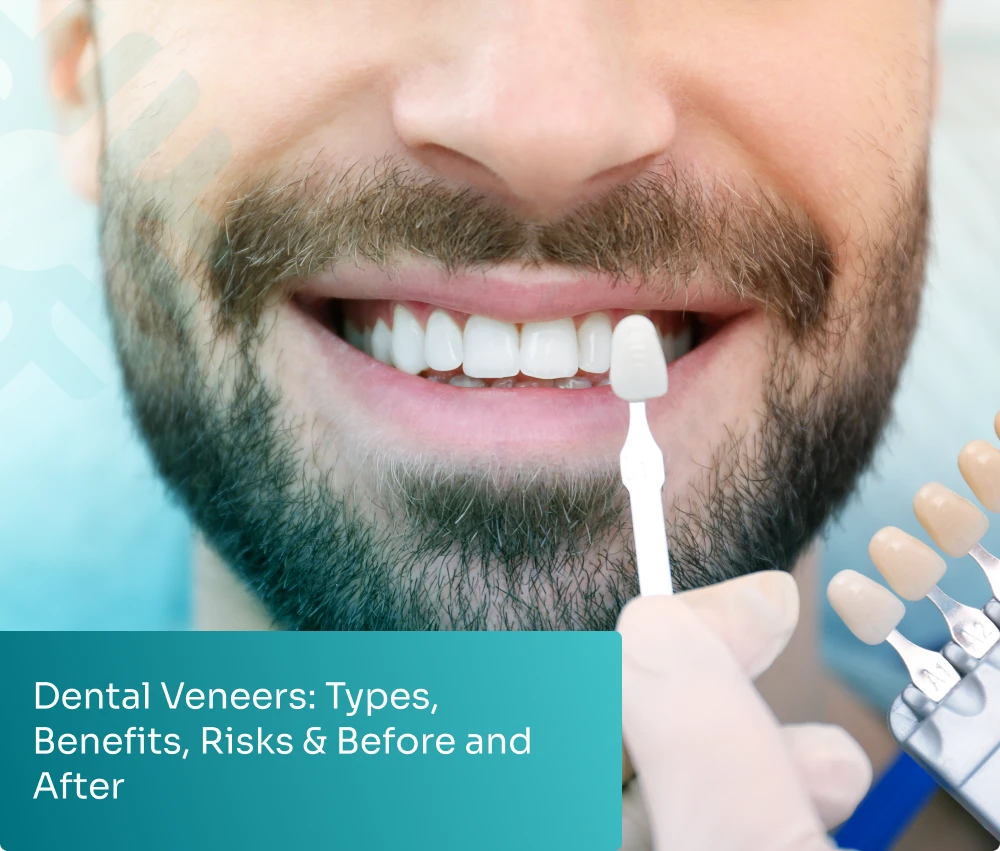
The term veneer is used to refer to cosmetic shells that cover the front surface of the teeth, and they may be made from porcelain or composite materials. To avoid repeating the full veneer guide in this article, readers can refer to the dedicated page covering related benefits, disadvantages, and cases.
Also read: Dental Veneers: Benefits and Disadvantages.
The main difference between porcelain and composite laminates lies in the material used, how the laminate is made and applied, and its resistance to staining and wear. Neither option can be considered best for all cases, because the choice depends on the condition of the teeth, the amount of enamel, the amount of change required, and the bite.
| Comparison point | Porcelain Laminates | Composite Laminates |
|
Material |
Porcelain intended for dental restorations |
Tooth-colored composite resin |
|
Preparation method |
Usually made as custom shells based on measurements or a digital scan |
The material can be shaped directly on the tooth in some cases |
|
Tooth preparation |
May require removal of a limited amount of enamel depending on the case |
May require less preparation in some cases |
|
Appearance |
Has a good ability to mimic the appearance of natural teeth |
Can be shaped and color-matched to surrounding teeth |
|
Stain resistance |
Relatively more resistant to staining |
More prone to staining over time compared with porcelain |
|
Repair |
Fracture or damage may require assessment to repair or replace the laminate |
Some types of damage can be repaired relatively more easily |
|
Choosing the type |
Depends on the cosmetic goal, dental condition, and bite |
Depends on the amount of change required, tooth condition, and treatment plan |
Porcelain may be suitable when the goal is to achieve a more stable change in tooth shape or color with relatively good resistance to staining. Composite may be an option in some cases that need limited modification or when preserving as much tooth structure as possible is one consideration in the treatment plan.
However, the choice does not depend on the material alone. The dentist assesses gum health, available enamel, tooth position, bite, and the degree of discoloration or damage, then determines whether one type of laminate is suitable or whether another procedure would be more appropriate.
Yes, minimal-prep or no-prep options are available in selected cases, but the phrase “dental laminates without shaving teeth” does not mean they are suitable for everyone. The decision depends on tooth size and position, whether there is enough space for the laminate, tooth color, the bite, and the material thickness needed to achieve a natural result.
Minimal-prep dental laminates or no-prep options may be suitable when the tooth structure and position allow a laminate to be added without creating unnatural bulk or affecting the bite. Cases in which the dentist may discuss this option include:
In contrast, there are cases in which placing a laminate without appropriate preparation may increase tooth thickness or create an unbalanced appearance, and another procedure may be more suitable. These include:
Not necessarily. Some options described as minimal-prep or no-prep may still require the removal of a very small amount of enamel depending on the case.
Cleveland Clinic explains that these options are less invasive than traditional veneers, but they are not suitable for everyone and may still require a limited amount of enamel preparation. The dentist therefore determines the need for preparation after assessing tooth shape and position, the bite, and the desired result.
For more details about this option, learn about dental Lumineers.
Dental laminates may be a suitable cosmetic option when the teeth and gums are in stable health and the goal is to improve the appearance of a limited issue that can be covered with a thin shell without the need for more extensive treatment.
Dental laminates may not be the first option if the problem requires dental or orthodontic treatment before cosmetic care. The Saudi Ministry of Health notes that weak enamel, poor oral hygiene, teeth grinding, and severe crowding are among the situations that may limit the suitability of veneers.
For more official medical information about cases and uses, see the Saudi Ministry of Health page on veneers.
Before choosing dental laminates, the assessment is not limited to smile color. The dentist examines oral health and compares the cosmetic goal with options that preserve more tooth structure, then determines whether laminates are suitable and what type of preparation is required.
Choosing the laminate shade does not mean selecting the whitest option. The dentist balances the color of the natural teeth, face and lip shape, tooth size, gum line, bite, and the result the person wants. The goal is to achieve natural harmony rather than a shade that looks separate from the rest of the smile.
If teeth whitening is part of the cosmetic plan, it is preferable to discuss its timing before selecting the laminate shade, because whitening agents do not change the color of veneers, crowns, or fillings in the same way they lighten natural teeth.
The dental laminate procedure varies according to the material and type of preparation, but the general process begins with examining the teeth and gums and planning the result, then taking measurements or a digital scan, preparing the tooth when needed, trying the laminates and bonding them, followed by checking the bite and follow-up after placement.
Learn more in the article on how dental veneers are applied.
The difference in dental laminates before and after treatment mainly appears in tooth color, shape, and harmony, but the amount of change varies from case to case. Dental laminates do not change every aspect of the smile in the same way; they are designed to address specific cosmetic concerns after assessing the teeth, gums, and bite.
Possible changes after placement may include:
These changes do not mean that the same result can be achieved for everyone. The result is affected by the original tooth shape, color, position, gum health, the number of teeth being treated, the material used, and the amount of preparation required.
Good planning therefore focuses on achieving a result that suits facial features and natural teeth rather than simply choosing whiter teeth or the same shape for everyone. Images from other cases should not be considered a guarantee of the result, even when the visible concern appears similar.
The benefits of dental laminates lie in their ability to modify several cosmetic aspects of the front teeth within one procedure when the case is suitable. The dentist can customize color, shape, and size to suit surrounding teeth, the smile line, and facial features.
Potential dental laminate benefits include:
However, these benefits do not mean that dental laminates are the best cosmetic option for everyone. If the problem is limited to tooth color, whitening may be a more conservative option, while crowding or bite problems may require orthodontics. Teeth with decay or gum disease need the health problem treated first before considering laminates.
Risks vary according to the type of laminate, amount of preparation, and condition of the teeth. Key considerations are that some types require removal of part of the enamel, some people may develop sensitivity, and a laminate may fracture, detach, or need repair or replacement over time.
Dental laminates do not cause decay by themselves, but the natural tooth beneath and around their margins remains susceptible to decay if plaque accumulates or oral hygiene is not maintained. Daily care, cleaning between the teeth, and regular dental examinations therefore remain necessary after placement, and laminates do not replace routine decay prevention.
No. A more conservative procedure may be better if it achieves the goal without removing healthy tooth structure. The dentist therefore compares the problem with the available options before recommending laminates.
Dental laminate care depends on keeping the surrounding teeth and gums healthy. The presence of a shell does not prevent plaque accumulation or decay around the margins, so daily care and regular follow-up remain an essential part of maintaining the result.
Dental laminate cost varies from one case to another because it does not depend only on the type of laminate. It is also affected by the number of teeth being treated, their condition before the procedure, the amount of preparation required, and the plan developed by the dentist to achieve an appropriate result.
The main factors that affect cost include:
General prices found online therefore do not provide an accurate estimate of what each case will require. Determining the actual cost begins with examining the teeth and gums, then deciding on the type and number of laminates and any necessary procedures before placement.
If you would like to have your teeth assessed before choosing a laminate type, begin with an examination that evaluates the health of your teeth and gums and whether the procedure is suitable for your case. Book your appointment through the official Magrabi Health booking form to choose a suitable time.
Dental laminates can help improve color, shape, and harmony in selected cases, but the right decision begins with examining the teeth, gums, and bite rather than choosing the material or shade alone. Minimal-prep dental laminates may suit some cases, while others may benefit from whitening, cosmetic fillings, orthodontic treatment, or another restorative option. Medical assessment helps select the most appropriate option while preserving dental health as much as possible.
Medically reviewed by Dr. Ahmed El Tokey.
Medical Disclaimer: The information in this article is intended for health education purposes only and is not a substitute for visiting a doctor or consulting a qualified specialist. Magrabi Health doctors recommend seeing a doctor for an accurate assessment and to determine the appropriate treatment.

The Magrabi Health Editorial Team creates educational medical content designed to help readers better understand symptoms, diagnostic tests, treatment options, and preventive healthcare measures across a wide range of medical topics, drawing on trusted sources and specialized clinical expertise. Since 1955, Magrabi Health has built more than 70 years of experience in specialized healthcare through a regional network of over 40 facilities across 5 countries. Its commitment to quality and patient safety is reflected in numerous accreditations and recognitions, including the designation of several eye centers as Centers of Excellence in Ophthalmology by the Surgical Review Corporation (SRC). This content is intended for educational purposes only and should not be considered a substitute for professional medical advice, diagnosis, or treatment.
Dental laminates are thin shells attached to the front surface of the teeth to improve their color, shape, or visible size. They may be made from porcelain or composite resin.
No, dental laminates and a Hollywood Smile are not necessarily the same. Dental laminates are a specific cosmetic procedure, while a Hollywood Smile is a broader plan that may include various cosmetic treatments.
The most common types of dental laminates are porcelain and composite resin, with minimal-preparation options available in selected cases.
Yes, minimal-prep or no-prep options are available in selected cases, but they are not suitable for everyone.
Dental laminates may be suitable when the teeth and gums are in stable health and the goal is to improve the appearance of limited issues that can be covered with a thin shell.
Benefits include improving discoloration, adjusting tooth shape and size, concealing minor fractures, reducing the appearance of gaps, and providing a natural appearance.