November 29, 2026
Share


Last updated: 29 November 2026.
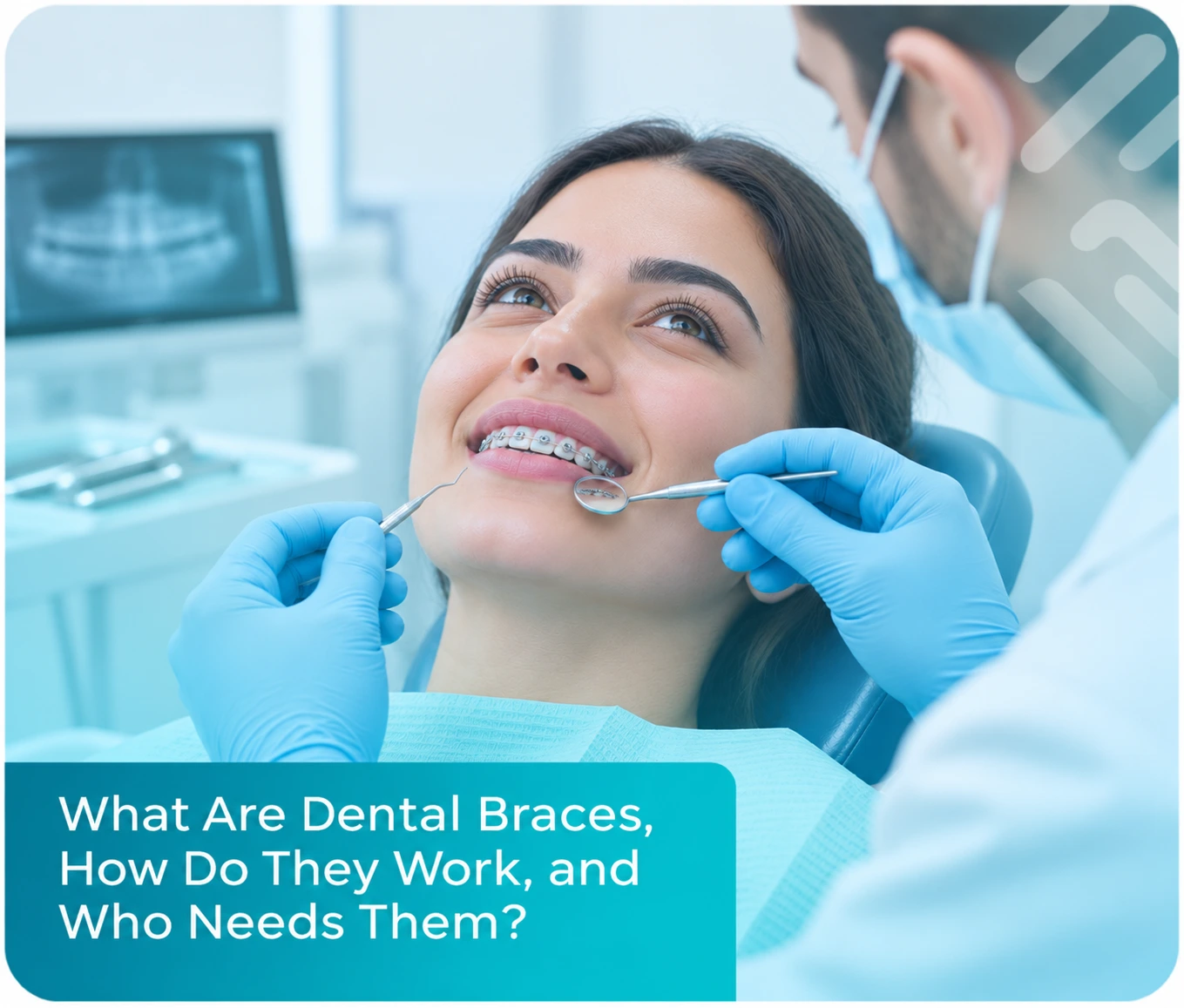
The benefits of braces include improving teeth alignment, correcting the bite, improving chewing, making teeth easier to clean and distributing biting forces more evenly. Braces may also reduce the risk of injury to protruding front teeth, prepare teeth for dental restorations and improve smile harmony. These benefits vary depending on the nature of the problem and the health of the gums and supporting bone.
The importance of treatment goes beyond appearance. Its purpose may be to improve oral function or prepare the teeth for another dental procedure. However, straight teeth do not necessarily prevent all oral diseases. A specialist assessment helps determine the realistic outcomes of treatment. This article explores seven benefits, which conditions may benefit from treatment and how to maintain the results.
Wondering how braces could benefit your particular condition? Contact the Magrabi Health team via WhatsApp to learn more about the appropriate assessment.
Before making a decision, explore Orthodontics at Magrabi Health and learn about the available assessment and treatment options based on the condition of your teeth and jaws.
The goals of orthodontic treatment range from correcting tooth positions and improving the bite to achieving other health and cosmetic benefits. Here are seven potential benefits of orthodontic treatment, along with the conditions that may benefit from them.
Braces allow teeth to move gradually into carefully planned positions. They may help correct rotated or tilted teeth and close unwanted gaps. The orthodontist determines appropriate tooth positions while considering root health, gum health and the available space within the jaw.
When the upper and lower teeth do not meet properly, biting or chewing food may become more difficult. Correcting certain bite problems, such as an open bite, may improve contact between the teeth and make biting more comfortable.
A 2024 systematic review involving 20 trials and 1,470 patients found improvements in bite-related outcomes following fixed orthodontic treatment. However, results varied considerably between studies, meaning not all patients will experience the same degree of functional improvement.
Overlapping teeth can make it difficult to floss or reach certain surfaces with a toothbrush. After crowding is corrected, these areas may become easier to clean. However, plaque can accumulate around orthodontic appliances during treatment, making additional oral care necessary.
The Saudi Ministry of Health recommends brushing twice daily with fluoride toothpaste and regularly cleaning between the teeth. Orthodontic treatment does not replace these preventive habits.
Certain bite problems may result in uneven tooth contact or localized friction between teeth. Adjusting tooth positions may help improve this contact in selected cases. However, tooth wear can also result from teeth grinding or exposure to acids. Therefore, braces are not a treatment for every cause of tooth wear.
Significantly protruding front teeth are more vulnerable to injury. A Cochrane review involving 27 studies found that early orthodontic treatment in children with protruding front teeth reduced incisor injuries compared with delaying treatment until adolescence. This does not mean that every child requires early treatment or that braces completely prevent dental injuries.
In some cases, orthodontic treatment forms part of a coordinated treatment plan involving a prosthodontist. For example, when a tooth is missing, braces may help create the space needed for its replacement or close the space when appropriate. An article published in the British Dental Journal explains the role of orthodontic planning in managing spaces caused by missing teeth.
Correcting crowded, spaced or protruding teeth may improve the appearance of the smile and a person's satisfaction with it. A 2023 scientific review suggested potential improvements in oral health-related quality of life following orthodontic treatment or jaw surgery. However, the certainty of the evidence was very low. Improvements in self-confidence or changes in facial appearance cannot be guaranteed for every patient.
Not every case of crowding or spacing requires treatment. The following table provides examples of potential orthodontic treatment goals based on the condition identified during an examination.
|
Dental Condition |
Potential Benefit |
|---|---|
|
Crowded teeth |
Improved alignment and easier cleaning. |
|
Gaps between teeth |
Closing appropriate gaps and improving smile harmony. |
|
Open bite |
Improved tooth contact and ability to bite into food. |
|
Deep bite |
Correcting excessive overlap between the front teeth. |
|
Protruding front teeth |
Reduced protrusion and risk of certain injuries. |
|
Crossbite |
Improved relationship between the upper and lower teeth. |
|
Missing tooth |
Managing space for tooth replacement or closing it according to the treatment plan. |
|
Teeth shifting after previous orthodontic treatment |
Correcting orthodontic relapse when the condition is suitable. |
Yes. In children and adolescents, ongoing growth may allow certain jaw relationship problems to be addressed at an appropriate time. Early intervention may also reduce the risk of injury to protruding front teeth in selected cases.
The benefits of braces for adults include improved teeth alignment and bite correction, as well as potentially preparing teeth for dental restorations. The orthodontist needs to consider gum health, supporting bone, existing fillings and dental restorations. Age alone does not determine how much a patient may benefit from treatment.
Some changes appear gradually during treatment. Patients may notice improvements in teeth alignment before bite correction is complete. The speed of these results depends on the severity of the problem, the tooth movements required, tissue response and adherence to appointments and treatment instructions.
An improved smile does not necessarily mean that treatment is complete. The orthodontist also assesses tooth relationships and stability. Read more about how long braces take for front teeth.
No. It is important to distinguish between the expected health benefits of braces and conditions that require separate treatment, as shown in the following table.
|
Common Belief |
Medical Fact |
|---|---|
|
Braces prevent tooth decay. |
They may make cleaning easier, but they do not automatically prevent decay. |
|
Braces treat jaw pain and headaches. |
Braces are not a guaranteed treatment for these symptoms. Their cause must be identified. |
|
Braces always change facial shape. |
Changes vary depending on jaw relationships and the treatment plan. |
|
Results are permanent without a retainer. |
Teeth may shift after treatment ends. |
|
Braces treat all speech disorders. |
Improvements may occur in selected cases, and a speech assessment may be necessary. |
To develop balanced expectations, you can read more about the risks of braces and the importance of regular medical follow-up during treatment.
Teeth may shift after braces are removed. For this reason, NHS guidance emphasizes the importance of retainers and ongoing care. To maintain your results:
An orthodontic assessment is recommended when there is noticeable crowding, protruding teeth, difficulty biting or chewing, or tooth movement following previous treatment. An examination may also be beneficial before certain prosthetic dental treatments.
The orthodontist examines the teeth, bite and gums, and may request photographs or X-rays when necessary. This helps identify which problems can be corrected, establish treatment goals and determine whether tooth decay or gum inflammation needs to be treated before orthodontic treatment begins.
To understand the benefits that may be achieved in your particular case, schedule an appointment with an orthodontist at Magrabi Health through the online booking form or call 920018000 to arrange a suitable appointment.
The benefits of braces include improved teeth alignment, bite, chewing function and smile harmony. They may also make oral care easier or prepare teeth for other dental treatments. However, these benefits vary between patients and cannot be determined by tooth appearance alone. A specialist assessment helps establish realistic goals based on the health of the teeth, gums and jaws. Following the treatment plan, wearing retainers and attending follow-up appointments help maintain long-term results.
European Journal of Orthodontics - Occlusal Outcome (2024)
Clinical Oral Investigations - Oral Health-Related Quality of Life (2023)
Cochrane - Orthodontic Treatment for Prominent Upper Front Teeth in Children
British Dental Journal - Treatment of Absent Maxillary Lateral Incisors (2024)
Dentistry Journal - Malocclusion and Sound Speech Disorders (2025)
Saudi Ministry of Health - Dental Care
Medical Review: Dr. Hisham Ibrahim Sallam.
Medical Disclaimer: The information in this article is for health education purposes only and does not replace a visit to a doctor or consultation with a qualified specialist. Magrabi Health doctors recommend seeking medical evaluation for an accurate diagnosis and appropriate treatment plan

The Magrabi Health Editorial Team creates educational medical content designed to help readers better understand symptoms, diagnostic tests, treatment options, and preventive healthcare measures across a wide range of medical topics, drawing on trusted sources and specialized clinical expertise. Since 1955, Magrabi Health has built more than 70 years of experience in specialized healthcare through a regional network of over 40 facilities across 5 countries. Its commitment to quality and patient safety is reflected in numerous accreditations and recognitions, including the designation of several eye centers as Centers of Excellence in Ophthalmology by the Surgical Review Corporation (SRC). This content is intended for educational purposes only and should not be considered a substitute for professional medical advice, diagnosis, or treatment.
No. Braces may improve teeth alignment, bite and chewing function while making crowded areas easier to clean. The health and cosmetic benefits vary depending on the individual condition.
Yes, if chewing difficulties are related to a bite problem that can be corrected. Difficulties caused by other conditions require a separate assessment.
Braces may help in cases where difficulty pronouncing certain sounds is related to teeth misalignment or bite problems. However, speech disorders have multiple causes, and braces cannot guarantee their correction. An assessment by a speech specialist may be necessary.
Braces may make teeth easier to clean after crowding is corrected. However, evidence does not guarantee that orthodontic treatment alone reduces the risk of tooth decay. Oral hygiene, fluoride and regular dental examinations remain essential.
Yes. Adults can improve teeth alignment and correct certain bite problems, provided their gums and supporting bone are healthy enough for treatment.
The appearance of the smile or the position of the lips may change in some cases. However, braces do not predictably change facial shape in everyone. Skeletal jaw problems may require additional treatment.