- Saudi Arabia
- Egypt
- Qatar
- United Arab Emirates
June 1, 2026
Share


Last Updated:01/06/2026
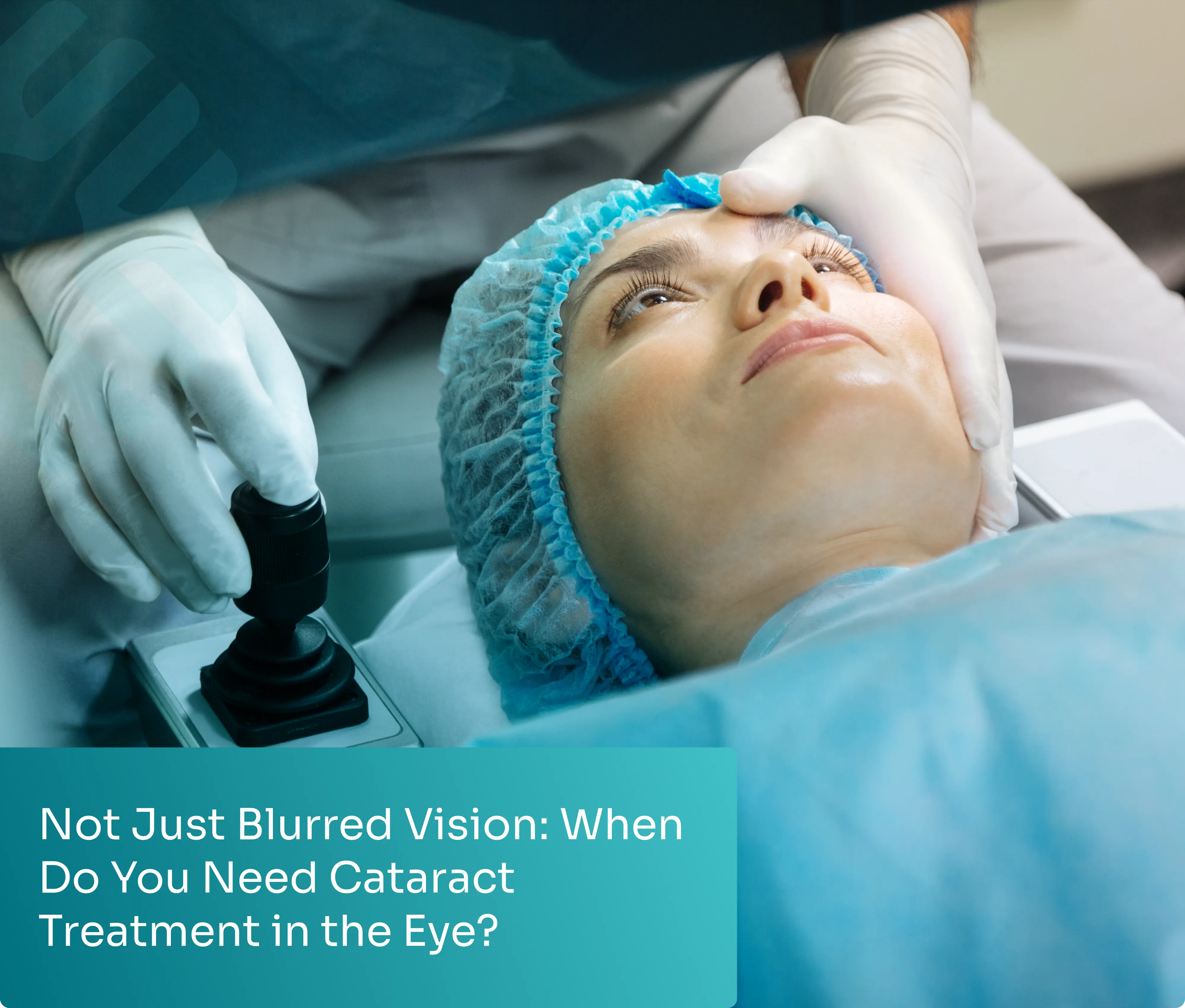
Cataract surgery and lens implantation is one of the common procedures in ophthalmology. It aims to remove the natural lens that has become cloudy and replace it with a clear artificial lens that helps improve vision clarity. Cataracts occur when the eye’s lens gradually loses its transparency, causing the patient to experience blurred vision or difficulty reading and driving, especially at night. Doctors at Magrabi Hospitals explain that the decision to undergo surgery does not depend only on the presence of cataracts, but also on how much they affect the patient’s daily life and the results of the medical examination.
Do you have a quick question about cataract surgery? Contact us on WhatsApp now.
Cataract surgery and lens implantation is a surgical procedure in which the ophthalmologist removes the cloudy lens inside the eye and replaces it with an artificial lens suitable for the patient’s condition. This procedure is also known as cataract surgery or cataract removal with lens implantation.
The procedure is often performed in one day without the need for an overnight hospital stay. It is usually done under local anesthesia using drops or a simple injection, depending on the doctor’s assessment. The doctor does not choose the type of lens or surgical technique until after a detailed examination of the eye, cornea, retina, and the required lens measurements.
Cataract surgery is performed by removing the natural lens that has become cloudy, then replacing it with a clear artificial lens that helps improve the passage of light inside the eye. The procedure is often done under local anesthesia. The patient usually does not feel clear pain during the procedure, but may feel slight pressure or temporary discomfort.
Doctors at Magrabi Hospitals explain that the steps of cataract removal surgery may vary slightly depending on the condition of the eye and the type of technique used, whether phaco technology or, in some cases, laser assistance. However, the basic idea is usually as follows:
Eye cataract surgery usually does not require an overnight hospital stay, and the patient returns home on the same day after their condition is checked. However, vision improvement may be gradual over the following days or weeks, and it differs from one person to another depending on the condition of the eye before surgery and whether there are other problems, such as corneal or retinal diseases.
Choosing the lens is one of the most important planning stages before cataract surgery and lens implantation, because the suitable lens differs from one patient to another according to eye measurements, corneal condition, astigmatism, retinal condition, and daily lifestyle. Doctors at Magrabi Hospitals explain that the goal is not to choose the “best lens” in general, but to choose the lens that is most suitable for the condition of the eye and the patient’s needs.
|
Lens Type |
When May the Doctor Recommend It? |
Key Feature |
Will the Patient Need Glasses Afterward? |
|
Monofocal lens |
Often used after cataract removal surgery when the goal is to improve vision at one distance, usually distance vision. |
A common option in cataract surgery with lens implantation, and it helps improve vision clarity at a specific distance. |
Yes, the patient may need glasses for reading or near vision depending on their condition. |
|
Multifocal lens |
May suit some patients who want to improve vision at more than one distance, such as far and near vision. |
It may help some cases reduce dependence on glasses after lens implantation following cataract removal. |
The need for glasses may be reduced, but complete independence from glasses cannot be guaranteed in all cases. |
|
Toric lens |
Used if the patient has a suitable degree of astigmatism along with cataracts. |
Helps improve vision and correct part of the astigmatism during eye lens replacement. |
The patient may need glasses for some distances or detailed tasks depending on the degree of astigmatism and examination results. |
|
Custom lenses based on measurements |
Determined by the doctor after detailed examinations, including measuring eye length, corneal curvature, and retinal condition. |
Helps the doctor choose an artificial lens that is more compatible with the eye’s needs after eye cataract surgery. |
This depends on the selected lens type, the condition of the eye, and how the patient uses their vision in daily life. |
The type of lens is not chosen based on cost or other people’s experiences only, because every eye has different measurements. Therefore, Magrabi doctors recommend discussing lens options with the doctor before lens implantation and cataract surgery to determine what is most suitable for the condition of the eye and the patient’s daily lifestyle.
You can read more about cataract services at Magrabi to learn about the medical details, examination steps, and treatment options.
The duration of cataract surgery and lens implantation varies from one patient to another depending on the degree of lens clouding, the condition of the eye, the technique used, and whether there are other issues in the cornea or retina. In many cases, the surgery itself is relatively short, but the time the patient spends inside the hospital or medical center is longer than the procedure time alone, because it includes preparation before the procedure and follow-up afterward.
Eye cataract surgery usually passes through several time stages, including:
Doctors at Magrabi Hospitals explain that the question should not only be: how long does cataract surgery take? It should also include: Is the eye ready for surgery? What type of lens is most suitable? Are there any factors that may affect recovery speed or vision clarity after surgery?
In most cases, lens implantation does not require an overnight hospital stay, and the patient returns home on the same day after being checked. However, the speed of vision improvement differs from one person to another. Some patients may notice clear improvement within days, while others may need more time, especially if there are other eye problems such as retinal weakness or corneal diseases.
After surgery, the patient receives specific instructions from the doctor. Following these instructions helps support better recovery and reduces the possibility of complications.
General instructions the doctor may recommend include:
Vision may gradually improve after cataract surgery and lens implantation over the following days and weeks, but the speed of improvement varies depending on the condition of the eye and the presence of other diseases such as diabetes or retinal problems.
Not all cases of cataracts can be prevented, especially those related to aging. However, some risk factors can be reduced, and eye health can be maintained through simple habits and regular examinations. Medical references indicate that some factors, such as diabetes, smoking, and exposure to ultraviolet rays, may be associated with an increased risk of cataracts.
Practical tips for eye care include:
The Ministry of Public Health in Qatar also notes that a large percentage of visual impairment can be prevented or treated, and cataracts are among the important causes that can be medically addressed.
It is performed by removing the cloudy lens from the eye, often using ultrasound waves through phaco technology, then placing a clear artificial lens in its place. The doctor determines the suitable lens type and technique after examining the eye, cornea, and retina.
The surgery itself is often short and may take around 30 minutes in many cases. However, the total time inside the medical center may be longer because of preparation before surgery and follow-up afterward.
The procedure is usually performed under local anesthesia, so most patients do not feel clear pain during surgery. The patient may feel slight pressure or temporary discomfort, and the doctor explains what to expect before the procedure.
The best lens is the one that suits the eye measurements, corneal and retinal condition, and the patient’s daily needs. It may be monofocal, multifocal, or toric, depending on the medical examination and the doctor’s recommendation.
Some patients may need glasses after surgery, especially for reading or certain distances, depending on the type of implanted lens and the condition of the eye. The doctor discusses this possibility with the patient before choosing the lens.
For an accurate medical evaluation for cataract treatment, book an appointment with Magrabi’s specialized doctors through a phone call or the booking form.
Cataract surgery and lens implantation helps address lens clouding when it begins to affect vision clarity and quality of life. The decision to undergo surgery depends on the medical examination, severity of symptoms, condition of the cornea and retina, and the most suitable lens type for the patient. Doctors at Magrabi Hospitals recommend not delaying the examination when blurred vision persists, because accurate diagnosis is the first step toward choosing a safe and suitable treatment for each case.
Medically reviewed by Dr. Waseem Zikri.
Medical Disclaimer: The information in this article is for health education purposes only and does not replace a visit to a doctor or consultation with a qualified specialist. Magrabi doctors recommend seeking medical evaluation for an accurate diagnosis and appropriate treatment plan.