November 29, 2026
Share


Last Updated: 29 November 2026
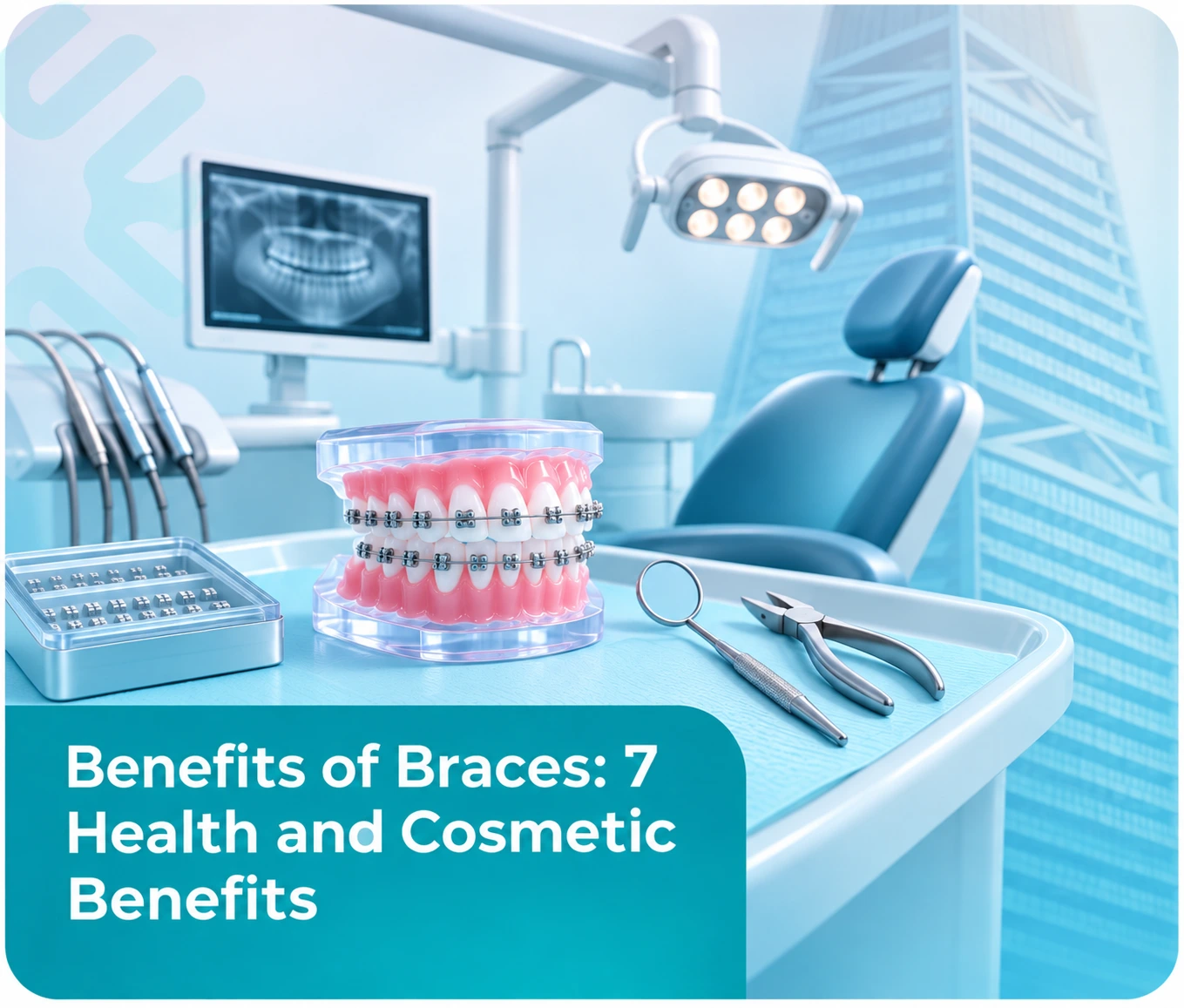
Dental braces are an orthodontic treatment that gradually moves the teeth to improve their alignment and correct certain bite problems, meaning the way the upper and lower teeth meet. An orthodontist uses fixed or removable appliances that apply controlled forces while monitoring tooth movement and the health of the gums and surrounding bone.
If you are wondering what are braces, this guide can help you understand how they work, which conditions may require an assessment, and what happens during examination and treatment. Minor crookedness does not necessarily mean braces are needed; the decision depends on an examination and the effect of the problem on oral health and function.
Do you have a question about whether braces are suitable for your condition? You can contact the Magrabi Health team on WhatsApp to ask about the assessment and appropriate branch. A diagnosis is not provided through WhatsApp.
To learn about the examination and available treatment options, you can visit the Magrabi Health Orthodontics service page.
Dental Braces at a Glance:
|
Question |
Short Answer |
|
What are dental braces? |
Treatment to move teeth and improve alignment and the bite. |
|
How do braces work? |
Light, controlled forces cause bone remodeling around the teeth. |
|
When might I need them? |
When crowding, gaps, or a bite problem calls for assessment. |
|
Are they suitable for adults? |
Yes, after assessing teeth, gums, and supporting bone. |
|
How long do braces take? |
Duration varies by case; comprehensive treatment may take one to two years or longer. |
|
What happens after braces are removed? |
A retainer is used to help maintain tooth positions. |
Orthodontics is a dental specialty that treats problems with tooth alignment and certain issues involving the relationship between the teeth and jaws. It addresses two related aspects: tooth alignment, meaning the arrangement of teeth within the dental arch, and the bite, meaning how the teeth meet when the mouth closes and during chewing.
In suitable cases, braces may make crowded areas easier to clean and improve chewing function, as well as appearance. However, the expected benefit varies between individuals, and the need for treatment cannot be determined by the appearance of the smile alone.
A tooth moves during orthodontic treatment because the appliance applies light, controlled forces. With fixed braces, brackets are attached to the teeth and hold wires that help guide their movement. The orthodontist may also use elastics to adjust how the teeth meet. Clear aligners, meanwhile, control movement through a sequence of trays designed according to the treatment plan.
The roots of teeth are connected to the jawbone by supporting tissues. When force is applied, the bone around the root gradually responds: some bone is resorbed in areas under pressure, while new bone forms in other areas. This process is called bone remodeling, and it allows the teeth to move toward their planned positions.
This response takes time, and the speed of tooth movement varies according to the teeth, bone, and treatment plan. Applying greater force does not necessarily move teeth faster or more safely.
During regular visits, the orthodontist reviews tooth positions, the bite, and gum health. They may change wires, adjust elastics, or move to a new set of aligners. The plan is reviewed according to the response rather than following a fixed schedule for every patient.
Not every minor irregularity needs orthodontic treatment. An assessment becomes important when tooth alignment makes certain areas difficult to clean, affects chewing, or is accompanied by a noticeable bite problem. There may also be cosmetic considerations that the orthodontist discusses with the patient after assessing the benefits and risks.
If the problem is limited and does not affect oral health or function, the orthodontist may suggest monitoring without treatment or discuss optional treatment choices. The need for braces cannot be confirmed through photographs or self-diagnosis.
Orthodontic treatment can be assessed at different ages. For children, an early examination may detect problems with tooth eruption or jaw growth, but it does not necessarily mean treatment should begin immediately. For adults, healthy gums and supporting bone remain essential considerations before selecting an appliance.
To learn more about how treatment timing differs by age, read Braces for Children, or Braces for Adults.
The assessment begins by asking about the patient’s medical history and expectations, followed by an examination of the teeth, gums, jaw relationship, and bite. When needed, the orthodontist may use photographs, X-rays, digital scans, or impressions to understand root positions, the bone, and the available space.
If tooth decay or gum inflammation is present, treating it may be necessary before fitting braces. In selected cases, the orthodontist may discuss creating space by extracting certain teeth or through other procedures. The decision is individual, and extraction or tooth filing is not a necessary part of every orthodontic treatment.
Fixed, removable, clear, and lingual appliances are available. The choice depends on the movement required, bite complexity, the patient’s age, and their commitment to wearing and cleaning the appliance. No single appliance is best for every case.
|
Option |
Basic Description |
|
Fixed braces |
Attached brackets and wires control different tooth movements. |
|
Clear aligners |
A series of removable trays requiring adherence to prescribed wearing time. |
|
Removable appliances |
Appliances used for specific purposes according to the problem and treatment plan. |
|
Lingual braces |
Brackets behind the teeth make the appliance less visible from the front. |
For details of their advantages and limitations without repeating them here, see Types of Dental Braces, or Clear Aligners.
The journey usually involves assessment and planning, preparing the mouth, and fitting the appliance or providing the aligners, followed by appointments to guide tooth movement. Once treatment ends, retainers are used to help prevent the teeth from returning to their previous positions.
How long do braces take? The duration varies from one patient to another according to the amount of movement, bite complexity, and adherence to appointments and instructions. Comprehensive treatment may take around one to two years or longer, while some cases are simpler or take more time. The orthodontist explains the estimated duration after examination and may revise it during treatment.
You can read the details in Stages of Orthodontic Treatment, then learn about Orthodontic Retainers and their role after appliance removal.
Teeth need careful cleaning during orthodontic treatment, particularly around brackets and wires. Brushing with fluoride toothpaste at least twice a day, cleaning between the teeth with tools recommended by the dentist, limiting sugar, and attending follow-up visits are advised.
With fixed braces, it is preferable to avoid very hard or sticky foods that may break appliance components. Removable aligners should be cleaned and worn according to instructions. After treatment ends, consistent retainer use helps maintain the results.
Mild pressure or discomfort may occur after fitting or adjustment and usually eases within a few days. However, severe or persistent pain, a wire that injures the mouth, a damaged appliance, or noticeable gum swelling warrants contacting the clinic. Difficulty swallowing or breathing with severe swelling requires urgent care.
To read more about preventing plaque buildup and tooth decay, see Tooth Decay After Braces.
To find out whether braces are suitable for you, you can book an orthodontic assessment with the Magrabi Health team or call the contact centre listed on your branch’s website.
Dental braces are a planned treatment to improve tooth alignment and certain bite problems by moving teeth gradually. The success of the plan depends not only on the type of appliance but also on diagnosis, dental and gum health, follow-up, daily care, and retention. If you have crowded teeth, gaps, or a bite problem, an orthodontic assessment can help determine whether treatment is needed and which options may be suitable, without relying on guesswork.
American Association of Orthodontists (AAO): How Do Braces Work?
National Health Service (NHS): Braces
Magrabi Health: Orthodontics Service in Saudi Arabia
Medical Review: Dr. Hisham Ibrahim Sallam.
Medical Disclaimer: The information in this article is for health education purposes only and does not replace a doctor’s visit or consultation with a qualified specialist. Magrabi Health doctors recommend seeking medical evaluation to assess the condition accurately and determine the appropriate treatment.

The Magrabi Health Editorial Team creates educational medical content designed to help readers better understand symptoms, diagnostic tests, treatment options, and preventive healthcare measures across a wide range of medical topics, drawing on trusted sources and specialized clinical expertise. Since 1955, Magrabi Health has built more than 70 years of experience in specialized healthcare through a regional network of over 40 facilities across 5 countries. Its commitment to quality and patient safety is reflected in numerous accreditations and recognitions, including the designation of several eye centers as Centers of Excellence in Ophthalmology by the Surgical Review Corporation (SRC). This content is intended for educational purposes only and should not be considered a substitute for professional medical advice, diagnosis, or treatment.
Treatment to move teeth and improve alignment and the bite.
Light, controlled forces cause bone remodeling around the teeth.
When crowding, gaps, or a bite problem calls for assessment.
Yes, after assessing teeth, gums, and supporting bone.
Duration varies by case; comprehensive treatment may take one to two years or longer.
A retainer is used to help maintain tooth positions.