- Saudi Arabia
- Egypt
- Qatar
- United Arab Emirates
June 5, 2026
Share


Last updated: 5/6/2026
Choosing the best eye hospital in Jeddah is not a simple decision, especially with the many options and the variety of medical services available. It is not only about the most well-known name or the closest search result, but about the hospital’s ability to guide you to the right doctor, the right examination, and the medical plan closest to your condition.
When searching for an eye hospital in Jeddah, it is better to look at the full picture: Are there precise specialties? Are the examinations suitable for the symptoms? Is the information clear before booking? Is it easy to reach the branch and follow up when needed? These details can make a major difference in the patient’s experience and reassurance.
In this guide, you will learn practical steps that help you evaluate eye hospitals in Jeddah before booking, so you can choose based on clear criteria such as the doctor’s experience, quality of examinations, accreditations, patient reviews, and ease of access.
Because choosing the suitable specialty for your condition may sometimes be confusing, you can ask Magrabi Hospital’s team via WhatsApp to help you and guide you to the suitable service and doctor.
Before booking your appointment, try to narrow down your options in an organized way instead of relying on reputation or the first result that appears in search. You can start with these steps:
After narrowing down your options to a limited number of eye hospitals in Jeddah, start with a calm evaluation.
Do not base the decision on the name only, but on the clarity of information, the suitability of the specialty for your condition, the doctor’s experience, and the ease of the patient journey from booking to follow-up.
The hospital’s official website helps you form an initial impression of how clear the information available to the patient is. Look for:
Having these details helps you compare and get an idea before making a decision, but it does not mean alone that the hospital is the best.
To make the comparison practical, here is an example that shows the type of information that helps the patient verify and compare before booking: Magrabi Health Eye – North Jeddah page.
Google reviews help you choose the best eye hospital in Jeddah, but do not rely on one positive review or one negative comment.
Because each patient’s experience is different.
It is better to collect enough patient opinions, then look for repeated comments.
For example, notice the doctor whose name is repeatedly mentioned with praise or approval, and how clearly they explain things to patients. Also pay attention to waiting time, ease of booking, reception organization, and how the hospital handles notes or complaints.
The more you know the closest specialty to your condition, the more accurate and reassuring your choice of hospital and doctor becomes.
Therefore, when searching for the best eye hospital in Jeddah, review the available specialties and make sure there are doctors suitable for your condition. The retina specialty differs from cataract, glaucoma, cornea, and vision correction.
Also, a diabetic patient, or someone who notices flashes of light or black spots, needs a retinal examination in Jeddah with a specialist, because some retinal problems may need fast and accurate evaluation.
As for pediatric ophthalmology in Jeddah, squint, lazy eye, and early vision problems need a pediatric ophthalmologist or a squint specialist.
In addition, there are doctors specialized in oculoplastic and eyelid surgery, which is now considered an independent specialty.
Replace the paragraph with this version:
When comparing eye hospitals in Jeddah, do not rely on general phrases such as “best care” or “highest quality” without supporting evidence. Look for medical accreditations and quality certificates published on the official website, because they give a clearer indication of the institution’s attention to safety standards and care organization.
Medical accreditations differ from awards and news. Medical accreditation is usually linked to the evaluation of specific standards within the facility, such as procedure quality, patient safety, work organization, and the care experience.
As for awards and news, they are a positive factor because they may reflect the institution’s presence, history, achievements, or the appreciation of different entities for its role. However, they are not enough on their own to judge the quality of the eye department or the suitability of the doctor for your condition. Magrabi awards, for example.
For example, you can refer to Magrabi’s page about JCI accreditation as an explanatory reference for the nature of this type of accreditation, as Magrabi’s page explains that JCI accreditation is related to evaluating the standards of quality and safety of care inside healthcare institutions.
Treat this criterion when choosing the best eye hospital in Jeddah as part of the picture, not as the main reason for choosing.
It is useful to refer to official Saudi sources when evaluating any medical entity.
These sources help you understand patient rights, general health guidelines, and approved health information.
When choosing the best eye hospital in Jeddah, you can refer to the Saudi Ministry of Health website as a supporting awareness source, to view information such as patient rights, general health guidelines, ways to handle complaints or notes, and approved educational information about health services.
Place this factor within the criteria for choosing the best eye hospital in Jeddah, alongside the suitable specialty, doctor’s experience, accreditations, patient reviews, and ease of access.
AI tools help you prepare an initial list of eye hospitals in Jeddah, or organize the criteria you want to compare. However, they are not enough on their own to make a medical decision.
Sometimes AI tools provide inaccurate or outdated information.
Therefore, use them as a starting point for research, then verify through the official website, doctors’ pages, patient reviews, and trusted sources.
The experience of someone close and trusted, such as a family member or a friend, may help you understand details that do not always appear on the official website or in ads. They may tell you about ease of booking, how patients are treated, waiting time, and how clearly the doctor explains the condition and treatment plan.
But do not let one person’s experience decide for you completely. Use it as a supporting factor, then compare it with your medical need, the suitable specialty, the doctor’s experience, accreditations, and other patient reviews.
In light of the development of medical technologies in Saudi Arabia, and the Kingdom’s interest in raising the quality of healthcare services, eye hospitals in Jeddah have started competing to provide more accurate and organized care, while relying on modern devices and more diverse medical specialties.
Therefore, when comparing to choose the best eye hospital in Jeddah, there must be clear medical criteria that distinguish the suitable hospital, such as:
Eye diseases differ in the way they are diagnosed and treated. Therefore, precise specialties are an important factor when choosing an eye hospital in Jeddah. A diabetic patient, or someone who has flashes of light and black spots, needs an evaluation of the retina and fundus.
As for someone who wants vision correction, they need a corneal evaluation, such as corneal topography and corneal thickness measurement, before determining whether LASIK or other procedures are suitable.
When having an eye exam in Jeddah, the type of examination should be linked to the symptoms, not a unified examination for all patients.
A good examination starts with measuring visual acuity and refraction to detect nearsightedness, farsightedness, or astigmatism. But it does not stop here. The doctor may need a slit-lamp examination to evaluate the cornea, lens, and eyelid, or eye pressure measurement when glaucoma is suspected, or a fundus examination when there is diabetes, flashes, floaters, or sudden vision loss.
Ophthalmology references explain that a comprehensive eye exam may include more than one test depending on age, symptoms, medical history, and risk factors.
The doctor’s experience is measured by the number of similar cases they deal with and the type of procedures they perform regularly. A cataract patient, for example, needs a doctor who evaluates the degree of opacity, the condition of the retina, and lens measurements before surgery.
A keratoconus patient needs a doctor who reviews corneal topography, corneal thickness, and vision stability before suggesting treatment.
When considering cataract treatment in Jeddah, the evaluation should include the degree of lens opacity, its effect on daily vision, the condition of the retina, and lens measurements before determining whether surgery is suitable.
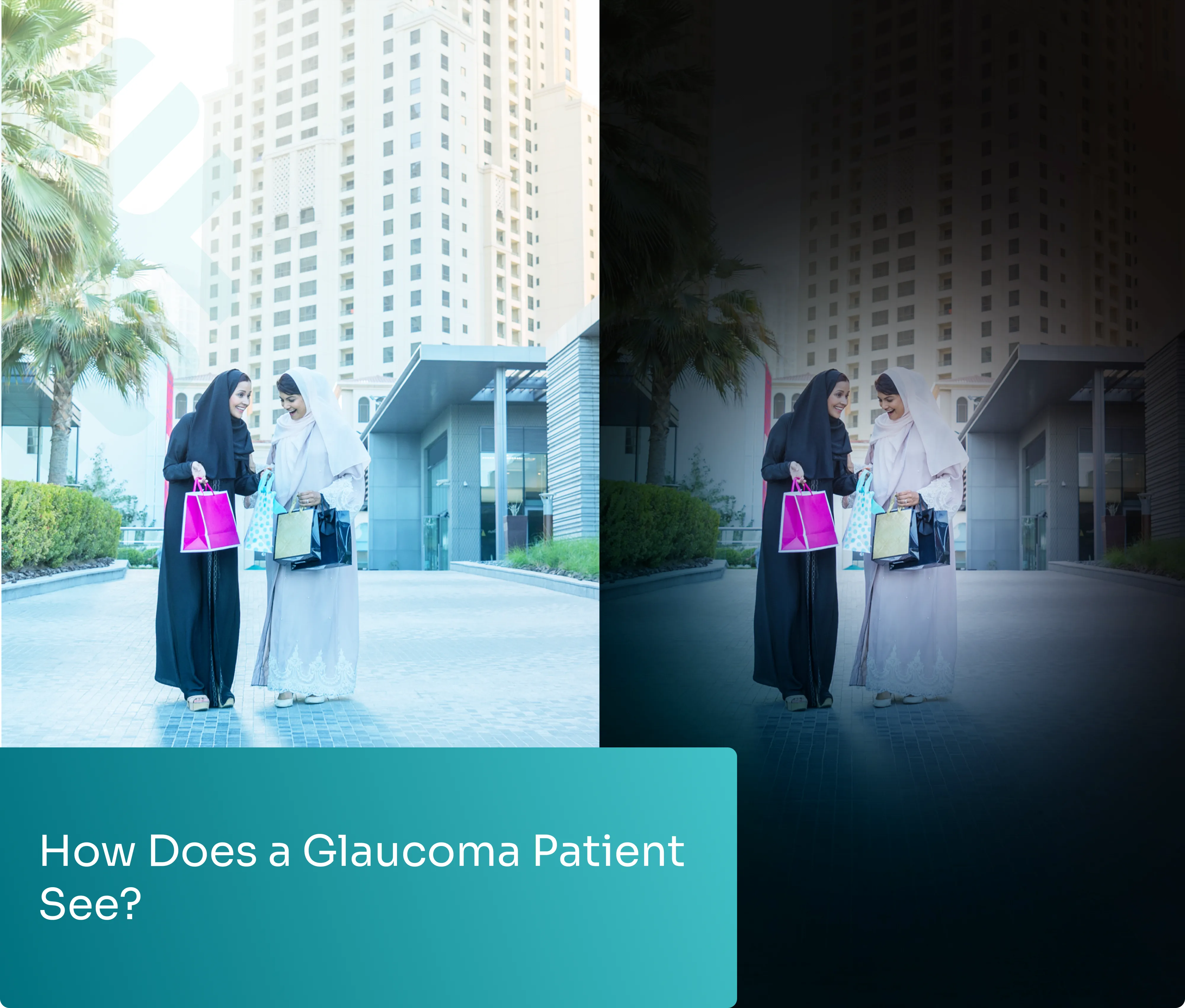
As for a glaucoma patient, for example, they need careful follow-up of eye pressure, the optic nerve, and visual field. Therefore, review the doctor’s experience in your specific condition, not in ophthalmology in general.
A good plan does not stop at naming the diagnosis. The patient should know the cause of the problem, the degree of its effect on vision, and the options suitable for their specific condition. In cataract cases, for example, the patient needs to understand whether follow-up is enough for now, or whether the opacity has started to affect daily vision. In glaucoma cases, the treatment goal should be explained, because it often focuses on protecting the optic nerve and preventing vision deterioration.
Some eye conditions need regular follow-up, not just one visit. A glaucoma patient needs monitoring of eye pressure and the optic nerve. A diabetic patient needs retinal follow-up to detect any changes early. After procedures such as cataract surgery or vision correction, follow-up becomes important to monitor healing, adjust eye drops, and make sure vision is stable.
A patient may start with a simple complaint such as weak vision, then during the examination it appears that the cause is not only a prescription issue. The problem may be severe dry eye, early cataract, high eye pressure, retinal changes, or a corneal problem.
Therefore, it is important for the hospital to have a clear examination pathway, instead of dealing with all cases in the same way.
In some cases, the patient needs more than one opinion within ophthalmology. The general eye doctor may refer the patient to a retina doctor when changes appear in the fundus, or to a cornea doctor before vision correction, or to a glaucoma doctor when eye pressure is high.
The ease of this referral makes the patient journey clearer, and reduces delayed diagnosis or scattered visits.
In summary, the best eye hospital in Jeddah does not only tell you the name of the condition, but explains its cause, determines the appropriate examinations, connects you with the specialist doctor, and sets a clear follow-up plan that suits your condition.
If you are not sure about the suitable specialty for your condition, ask Magrabi’s team via WhatsApp to guide you to the service or doctor closest to your condition in Jeddah.
The most suitable hospital for your condition is the one that directs you to the correct specialty from the beginning. Not all eye symptoms are examined in the same way; gradual weak vision differs from opacity, and eye flashes differ from reading-related headaches or children’s vision problems.
|
Your Condition or Need |
Closest Specialty or Examination |
Why? |
|
Gradual weak vision or headache with reading |
Comprehensive vision examination |
To evaluate visual acuity, prescription power, nearsightedness, farsightedness, or astigmatism. |
|
Blurred or cloudy vision, especially with light |
Because opacity of the eye lens may cause blurriness, halos around lights, and difficulty with night vision. |
|
|
High eye pressure or family history of glaucoma |
Because glaucoma may affect the optic nerve and needs eye pressure measurement and accurate follow-up tests. |
|
|
Flashes of light or sudden black spots |
Because they may indicate changes in the vitreous body or retina, and need a fundus examination quickly. |
|
|
A diabetic patient with blurred or weak vision |
Retina |
Because diabetes may affect retinal blood vessels and may need regular follow-up even without clear symptoms. |
|
A child with squint, lazy eye, or difficulty with visual focus |
Because early diagnosis helps manage vision problems that may affect visual development. |
|
|
A desire to reduce dependence on glasses or contact lenses |
Because the decision for LASIK or other procedures needs evaluation of the cornea, its thickness, and stability of the prescription. |
|
|
Eyelid drooping or a functional or cosmetic problem around the eye |
To evaluate the effect of the eyelid on vision, the shape of the eye, and the function of the eyelid and surrounding tissues. |
This table helps you choose the starting point only. The final diagnosis requires a direct examination by an ophthalmologist, especially if the symptoms are sudden, appear with pain, or affect daily vision.
If you are looking for the best eye hospital in Jeddah, start by understanding your condition and the closest specialty to it, then choose the branch and doctor based on clear information. You can contact Magrabi Hospital via WhatsApp to know the service or doctor most suitable for your condition.
Choosing the best eye hospital in Jeddah may be difficult with the many options, but it becomes clearer when you connect the decision to your medical condition. Do not rely on reputation or reviews alone. Instead, compare specialties, the doctor’s experience, examination accuracy, accreditations, patient experiences, and ease of access. If sudden or vision-affecting symptoms appear, do not delay seeing an ophthalmologist.
Yes, an eye clinic may be suitable for vision testing and simple follow-up. A specialized eye hospital or center may be more suitable for cases that need advanced examinations, precise specialties, or follow-up with more than one doctor, such as retinal diseases, glaucoma, cataract, or pediatric ophthalmology.
Start by identifying your problem first, then compare 3 eye hospitals in Jeddah in terms of available specialties, doctors’ experience, examinations, accreditations, patient reviews, ease of access, and booking clarity. The best option is the one most suitable for your condition, not necessarily the most famous.
Google reviews are useful, but they are not enough on their own. Read a good number of experiences and monitor repeated notes about the doctor, waiting time, booking, and reception. After that, compare the reviews with medical specialties, accreditations, and the doctor’s experience in your condition.
Medical accreditations are an important indicator of standards for quality and patient safety, but they are not the only factor. When choosing an eye hospital in Jeddah, combine accreditation with the suitable specialty, the doctor’s experience, the accuracy of examinations, clarity of the treatment plan, and patient experiences.
AI can be used to collect an initial list or organize comparison points between eye hospitals in Jeddah. However, it is not suitable for making the final decision, because the information may be inaccurate or outdated. Always verify through the official website and trusted health sources.
See an ophthalmologist quickly if you experience sudden vision loss, severe pain, direct eye injury, flashes of light, sudden black spots, severe redness with pain, or clear deterioration in a child’s vision. These signs need medical evaluation without delay.