- Saudi Arabia
- Egypt
- Qatar
- United Arab Emirates
October 28, 2026
Share


Last updated: 28/10/2026
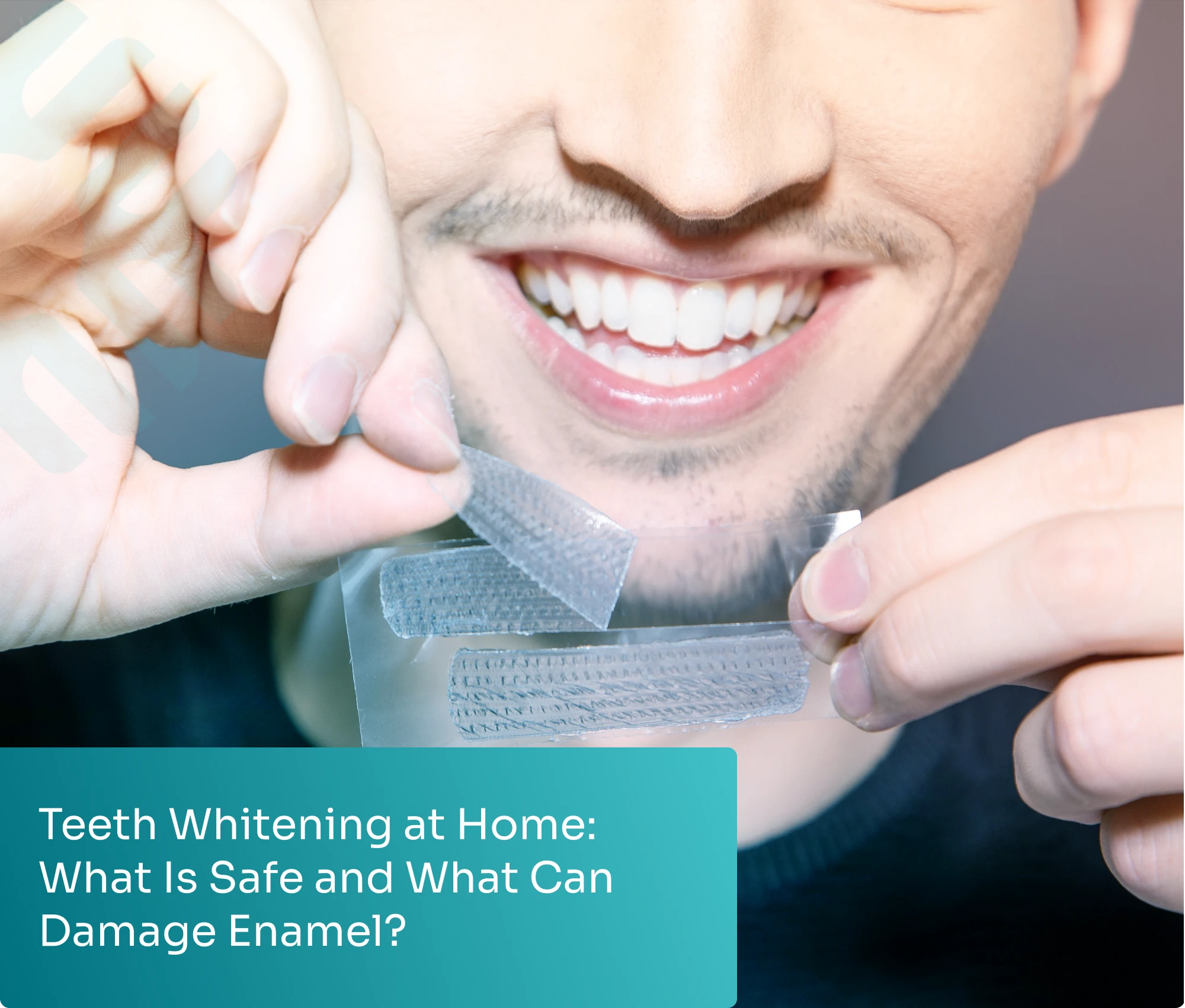
Teeth whitening trays are one of the methods used for at-home teeth whitening. Whitening gel is placed inside a tray that fits over the teeth to help lighten certain types of discoloration. The two main options are custom teeth whitening trays made by a dentist to fit the teeth and ready-made trays designed for home use.
Not every type of whitening tray suits every person in the same way. The health of the teeth and gums, the type of discoloration, existing fillings or crowns, and tooth sensitivity can all affect the choice of whitening method and the expected result. A dental examination before whitening can help determine the most appropriate option for the individual case.
To learn more about whitening and other cosmetic treatment options, explore Cosmetic Dentistry at Magrabi Health.
Have a question about teeth whitening trays?
Contact the Magrabi Health team on WhatsApp to ask whether teeth whitening trays may be suitable for your case and what the appropriate next step may be.
Teeth whitening trays are used with whitening gel that commonly contains hydrogen peroxide or carbamide peroxide to lighten natural tooth color. They may be custom-made by a dentist or sold as ready-made home teeth whitening trays. Custom-fitted whitening trays generally provide a closer fit, while results vary according to the type of discoloration, the whitening material, and the condition of the teeth. Temporary sensitivity or gum irritation may occur in some people.
|
Question |
Short Answer |
|
What types are available? |
Custom trays from a dentist or ready-made trays for home use |
|
What whitening agents are used? |
Hydrogen peroxide or carbamide peroxide |
|
Do trays whiten fillings and crowns? |
No. Restorations do not whiten in the same way as natural teeth |
|
What are the most common side effects? |
Tooth sensitivity and gum irritation, often temporary |
|
Are trays suitable for everyone? |
No. The teeth, gums, and type of discoloration should be assessed first |
Teeth whitening trays are trays placed over the teeth with a whitening gel inside them. The American Dental Association explains that at-home whitening systems can include custom trays supplied by a dentist as well as other products intended for home use.
Whitening agents can lighten natural teeth, but they do not change the color of fillings, crowns, dental implants, or veneers in the same way. A shade difference between natural teeth and restorations may therefore become more noticeable after whitening, which should be discussed with a dentist before treatment.
Whitening trays work by keeping whitening gel in contact with the tooth surfaces for the period specified for the product or treatment plan. Common whitening agents include hydrogen peroxide and carbamide peroxide. These substances react with colored compounds in the teeth and can make the tooth shade appear lighter.
Results are not identical for everyone. They can be affected by the degree and cause of discoloration, the original tooth shade, the concentration of the whitening material, how long it remains in contact with the teeth, and how closely instructions are followed.
Custom teeth whitening trays are made to fit the shape of the teeth after an impression or digital scan. A closer fit can help distribute the gel more precisely and reduce unnecessary contact between excess gel and the gums.
Ready-made trays have a general design rather than being manufactured for one person’s teeth. Their fit, whitening concentration, and instructions vary by product. It is therefore important to follow the product directions and not use extra gel or extend the application time in an attempt to speed up the result.
Custom teeth whitening trays and ready-made trays differ mainly in fit and professional supervision. Custom trays are made to match the shape of the teeth, whereas ready-made trays use a general size. This does not mean one option is suitable for everyone; the choice depends on oral health, the type of discoloration, and the whitening material used.
|
Factor |
Custom Trays |
Ready-Made Trays |
|
Fit |
Made to fit the teeth |
General design |
|
Assessment before use |
Usually begins with a dental examination |
May be used without a prior examination |
|
Whitening gel |
Selected according to the treatment plan |
Depends on the product |
|
Control of gel near the gums |
Usually better with a well-fitting tray |
Depends on tray size and design |
|
Follow-up |
The plan can be adjusted according to response |
Usually depends on product instructions |
Hydrogen peroxide and carbamide peroxide are among the most commonly used whitening agents. Concentrations and instructions vary between products, so the highest concentration should not automatically be considered the best option.
No. Use requirements vary according to the product and the amount of hydrogen peroxide released. Saudi Food and Drug Authority requirements place restrictions on certain peroxide concentrations and require professional involvement for specific products. For this reason, whitening gel should be used according to the product instructions and the dentist’s recommendation rather than by increasing the concentration or application time independently.
Not necessarily. The American Dental Association notes that stronger concentrations may be associated with a higher likelihood of tooth sensitivity. Selecting a whitening system should consider oral health, previous sensitivity, and the type of discoloration rather than concentration alone.
Whitening trays may be a suitable option for some people who want to lighten natural tooth color gradually at home, especially when the teeth and gums are healthy and the type of discoloration is likely to respond to whitening.
The most common side effects of teeth whitening are tooth sensitivity and gum irritation. The American Dental Association explains that these effects are often temporary, although they may be influenced by the whitening concentration, the way the product is used, and how long it remains in contact with the teeth.
If sensitivity develops after whitening, you can see a dentist if sensitivity is severe or persistent.
The safety of teeth whitening depends on the material, its concentration, the way it is used, and the condition of the teeth. Whitening products containing peroxide are subject to specific use requirements, so using them incorrectly or exceeding product or dental instructions can increase the likelihood of sensitivity, soft-tissue irritation, and other problems.
Abrasive or acidic home whitening remedies should not be used as substitutes for products designed for teeth whitening. The American Dental Association notes that some popular home remedies do not have sufficient evidence of effectiveness and may contribute to enamel erosion or surface roughness.
Whitening trays may suit some adults who have healthy teeth and gums and want to lighten the shade of their natural teeth. Suitability depends first on the cause of discoloration because not all types of tooth color change respond equally to external whitening.
Starting teeth whitening may not be appropriate before existing dental or gum problems are treated. The Saudi Ministry of Health advises consulting a dentist because certain factors and conditions may delay or make whitening unsuitable.
Choosing the tray and whitening gel begins with assessing the health of the teeth and gums and identifying the cause of discoloration. The examination may also identify problems that need treatment before whitening or restorations that will not change color with whitening gel.
Explore Cosmetic Dentistry Options
Choosing a whitening method depends on diagnosis, the type of discoloration, and the condition of the teeth. Visit Cosmetic Dentistry at Magrabi Health to learn about available options and how assessment begins.
How to use teeth whitening trays depends on the tray type, whitening material, concentration, and the instructions provided by the dentist or manufacturer. In general, only the specified amount of gel should be used, and neither the amount nor the application time should be increased to try to achieve a faster result.
Cleaning and storing whitening trays correctly can help maintain their shape and reduce the buildup of residual gel. Follow the dentist’s or manufacturer’s instructions because tray materials can differ.
Results from teeth whitening trays appear gradually, and the speed of improvement varies according to the tray type, whitening gel, degree of discoloration, and how closely instructions are followed. There is no single timeline that applies to every whitening system.
Whitening results are also not permanent. Tooth color may gradually change again over time because of strongly colored foods and drinks, smoking, and natural changes. Good oral hygiene and regular dental care can help maintain oral health and the appearance of the teeth.
There is no single price for teeth whitening trays because cost depends on the type of tray, the initial dental examination, the whitening material, any dental or gum treatment required before whitening, follow-up needs, and the branch providing the service.
A meaningful cost comparison is therefore easier after determining whether the case is suitable for custom teeth whitening trays or another whitening option rather than comparing products by price alone.
Stop using the trays and see a dentist if severe or persistent symptoms develop rather than trying to change the amount of gel on your own.
Do You Need an Assessment Before Whitening?
A dental examination can help identify the cause of discoloration and confirm that the teeth and gums are healthy before choosing whitening trays or another whitening method.
Teeth whitening trays are one option for at-home teeth whitening and are available as dentist-made custom trays or ready-made products. Their suitability and results depend on the type of discoloration, oral health, whitening gel, and correct use. Temporary tooth sensitivity or gum irritation may occur, so examining the teeth before whitening and following product or dental instructions can help support a more appropriate treatment plan.
Medically reviewed by Dr. Ahmed El Tokey.
Medical Disclaimer: The information in this article is for health education purposes only and does not replace a visit to a doctor or consultation with a qualified specialist. Magrabi Health doctors recommend seeking a dental evaluation for an accurate assessment and an appropriate treatment plan.

The Magrabi Health Editorial Team creates educational medical content designed to help readers better understand symptoms, diagnostic tests, treatment options, and preventive healthcare measures across a wide range of medical topics, drawing on trusted sources and specialized clinical expertise. Since 1955, Magrabi Health has built more than 70 years of experience in specialized healthcare through a regional network of over 40 facilities across 5 countries. Its commitment to quality and patient safety is reflected in numerous accreditations and recognitions, including the designation of several eye centers as Centers of Excellence in Ophthalmology by the Surgical Review Corporation (SRC). This content is intended for educational purposes only and should not be considered a substitute for professional medical advice, diagnosis, or treatment.
Custom trays from a dentist or ready-made trays for home use.
Hydrogen peroxide or carbamide peroxide.
No. Restorations do not whiten in the same way as natural teeth.
Tooth sensitivity and gum irritation, often temporary.
No. The teeth, gums, and type of discoloration should be assessed first.
Teeth whitening trays are trays placed over the teeth with a whitening gel inside them.