- Saudi Arabia
- Egypt
- Qatar
- United Arab Emirates
October 28, 2026
Share


Last updated: 28/10/2026
Many people look for teeth whitening at home to reduce yellowing and stains and make their smile look brighter. However, not every home remedy can actually change tooth color. Some acidic or abrasive methods may damage enamel or increase sensitivity when used repeatedly. A safer approach starts by identifying whether the concern is a surface stain or a deeper change in tooth color, then choosing a product designed for whitening and following its instructions or seeking dental advice when needed.
If you want to understand the professional options available after an assessment of your teeth and gums, you can explore Cosmetic Dentistry at Magrabi Health to learn how a dentist may decide whether whitening or another cosmetic option is more suitable for your case.
|
Have a question about teeth whitening? Contact the Magrabi Health team on WhatsApp to ask about whitening and the most appropriate next step before booking. |
|
Quick answer You can improve tooth color at home with whitening products designed for dental use, such as some whitening toothpastes, strips, gels, or trays recommended by a dentist. Lemon, charcoal, salt, and fruit peels are not proven substitutes for true whitening, and acidic or abrasive methods may damage enamel when overused. |
The Saudi Ministry of Health explains that teeth whitening may be done at home or in a dental clinic, and that the choice of method depends on the condition of the teeth and gums. It also notes that whitening toothpaste mainly removes surface stains and that there is no evidence that strawberries or banana peels whiten teeth.
Yes. Some at-home teeth whitening options can be used safely when you choose a product designed for whitening and follow the instructions carefully. Options may include whitening toothpastes, strips, gels, and trays. Results vary depending on the type of stain, the whitening agent, its concentration, and how long it is used.
Before starting, make sure there is no active decay, gum inflammation, or severe sensitivity. Using a product more often or for longer than directed does not necessarily produce a better result and may increase tooth sensitivity or gum irritation.
| Method | What It May Do | Does It Whiten Teeth? | What to Watch For |
|
Whitening toothpaste |
Helps remove some surface stains. |
Limited; it does not always change deeper tooth color. |
Choose a product designed for teeth and follow its instructions. |
|
Whitening strips or gel |
Applies a bleaching agent to the tooth surface. |
May lighten tooth shade depending on the product and the case. |
Do not extend the application time or use it more often than directed. |
|
Whitening trays |
Hold whitening material against the teeth for a set period. |
May provide gradual whitening. |
More controlled when used under a dentist’s guidance. |
|
Baking soda |
May remove some surface stains through mild abrasion. |
Not a substitute for bleaching deeper tooth color. |
Avoid aggressive or repeated scrubbing with powder. |
|
Lemon |
Does not provide medically proven whitening. |
Not recommended for whitening. |
Repeated acid exposure may weaken enamel. |
|
Charcoal |
May act as an abrasive on the tooth surface. |
Evidence is insufficient for safe, effective whitening. |
Avoid routine scrubbing with charcoal. |
|
Banana peel or strawberries |
Popular home remedies. |
No strong evidence of true whitening. |
Do not rely on them as a whitening plan. |
If you are wondering how to whiten teeth at home, start with steps that improve the chance of getting a useful result while reducing random use of home remedies:
Daily oral care does not bleach the deeper color of the teeth, but it helps reduce plaque and external staining and may help maintain whitening results for longer.
Whitening toothpaste may help reduce some surface stains, especially those related to food and drinks. It does not work in the same way as bleaching agents that change tooth color, so results are usually more limited and gradual.
Some strips and gels contain bleaching agents such as hydrogen peroxide or carbamide peroxide. They may help lighten tooth color when used as directed, but overuse can increase temporary sensitivity or gum irritation. The American Dental Association notes that consumer at-home whitening products may include toothpastes, strips, and gels, and that sensitivity and gum irritation are among the most common whitening side effects.
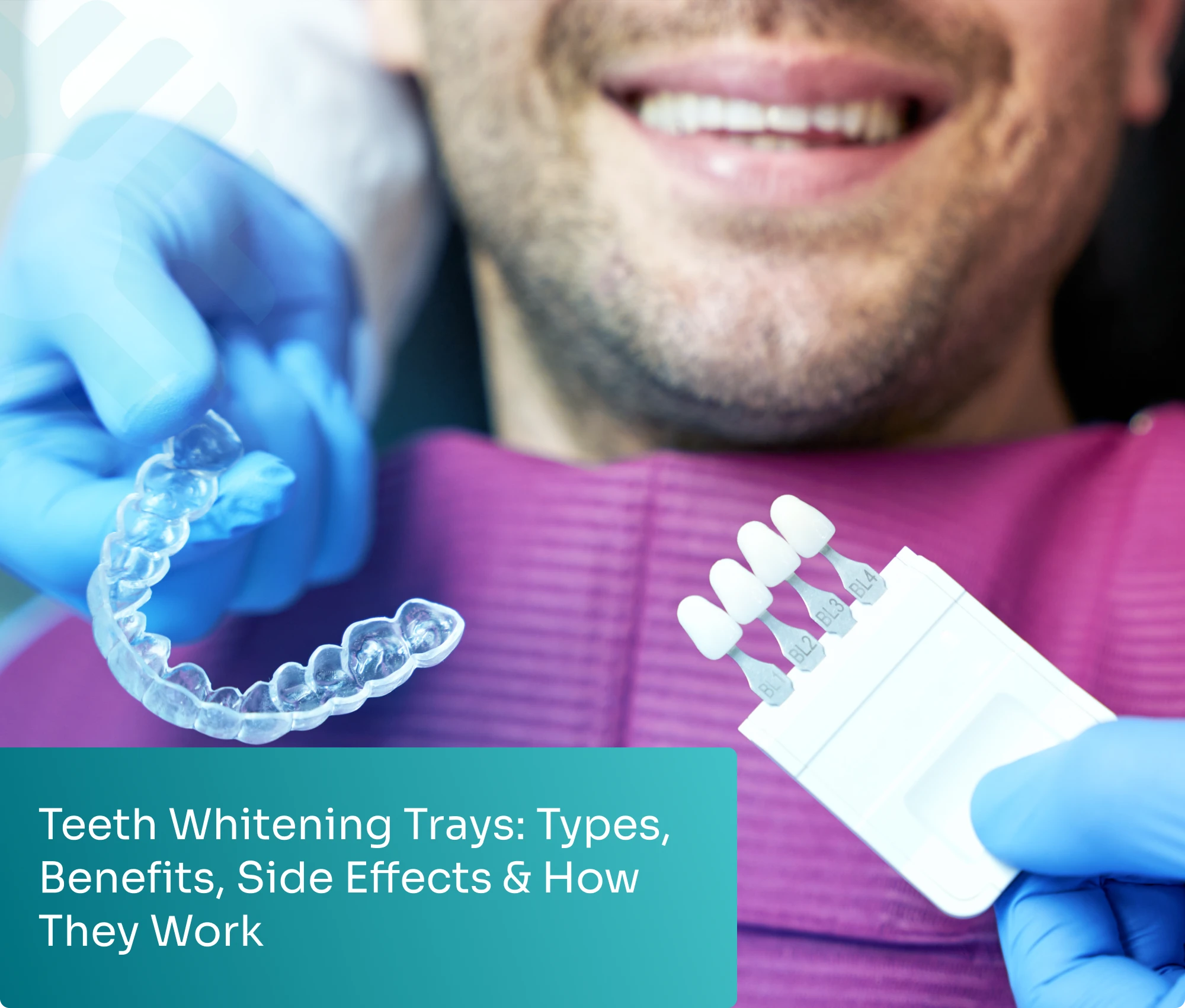
Custom trays may be a more controlled form of at-home teeth whitening because the dentist assesses the teeth and gums and determines the material and instructions that fit the case. For broader information on trays and home whitening, see Teeth Whitening: Types, Benefits & Best Options.
|
Short answer No home remedy can reliably and safely change the true color of teeth in 5 minutes. Some substances may make teeth look temporarily cleaner by removing part of a surface stain, but this is different from whitening that changes tooth shade. |
Very fast results should not be the main criterion for choosing a whitening method. Some quick home remedies combine acidic or abrasive ingredients that may create a temporary feeling of cleanliness while increasing the risk of enamel wear or sensitivity when repeated.
Many teeth whitening home remedies are promoted online as ways to whiten yellow teeth at home. Their popularity does not mean their safety or effectiveness is proven. A better approach is to assess what each ingredient can realistically do to the tooth surface and whether it carries a risk to enamel or gums.
Baking soda may help remove some stains from the tooth surface because of its abrasive effect, but it is not the same as bleaching deeper tooth color. Avoid aggressive or repeated scrubbing with baking soda powder. If you want to use a product containing it, choose a toothpaste formulated for dental use.
Lemon for teeth whitening is not recommended. Lemon is acidic, and repeated acid exposure may weaken enamel over time and increase sensitivity. A temporary change in surface appearance after using an acid does not mean that safe whitening has occurred.
Salt does not change the deeper color of teeth, and there is no need to add it to toothpaste to achieve medical whitening. Increasing the amount of abrasive material during brushing may create unnecessary friction on the tooth surface. A toothpaste or whitening product designed for dental use is a safer choice than an improvised mixture.
There is not enough evidence to show that charcoal teeth whitening provides safe and effective whitening. The American Dental Association describes the evidence for charcoal products as limited, while the Saudi Ministry of Health warns that scrubbing teeth with charcoal may contribute to enamel wear. Charcoal should not be used as a routine whitening method.
There is no strong evidence that banana peel teeth whitening, strawberries, or orange peel provide true whitening. Some fruits are acidic, and an ADA-reviewed study did not find a measurable whitening improvement from a strawberry and baking soda mixture. These methods should not be relied on as a treatment plan.
Removing surface stains means reducing marks on the enamel caused by coffee, tea, smoking, and other external factors. Daily oral care, some whitening toothpastes, and professional cleaning may help with these stains.
True whitening, however, targets colored compounds within the tooth structure using dedicated bleaching agents such as peroxide-based products. This is why teeth may look cleaner after surface stains are removed without the natural shade of the tooth actually changing.
If you want a broader comparison of professional and home whitening methods, read Teeth Whitening: Types, Benefits & Best Options.
| If the concern is... | What may help | When to see a dentist |
|
Coffee or tea stains |
A toothpaste or product designed for surface stains may help. |
If the stains do not improve or are severe. |
|
General yellowing of natural teeth |
A whitening product or dentist-supervised trays may be considered. |
Before using stronger whitening or if sensitivity is present. |
|
One tooth has become dark |
Do not rely on home whitening alone. |
The cause of the color change should be assessed. |
|
Crowns or veneers are a different shade |
Whitening does not change them like natural teeth. |
For shade matching and cosmetic planning. |
|
Sensitivity or gum inflammation |
Delay random whitening until the mouth is assessed. |
Have the teeth and gums checked first. |
It is better to speak with a dentist before whitening if you have a problem that could affect safety or the final result. At-home teeth whitening is not equally suitable for everyone, and some causes of discoloration cannot be corrected with whitening products alone.
The NHS notes that whitening should not be carried out when the teeth or gums are unhealthy, and that whitening agents affect natural teeth rather than changing the color of crowns, implants, or similar restorations in the same way.
|
Want to understand professional options instead of relying on home remedies? Explore Cosmetic Dentistry at Magrabi Health to understand how tooth color and gum health are assessed and whether whitening or another option may be more appropriate for your case. |
Home remedies are not appropriate when discoloration may be linked to a condition that needs diagnosis, or when tooth color changes are accompanied by pain or other symptoms. See a dentist if one tooth changes color noticeably, or if you have pain, persistent sensitivity, tooth decay, gum inflammation, or stains that do not improve with daily care.
If home whitening does not provide the desired result, or if you want a more detailed assessment, a dentist may discuss in-office options. We do not cover them in depth here so this article remains focused on teeth whitening at home.
Cleveland Clinic recommends maintaining good oral hygiene, limiting foods and drinks that contribute to staining, following whitening product instructions, and avoiding unproven alternative remedies.
|
Is the change in tooth color persistent or difficult to explain? You can book an appointment with a Magrabi Health dentist to assess your teeth and gums and determine whether whitening is suitable for your case and which option may be most appropriate after examination. |
Teeth whitening at home can be approached more safely when you distinguish between removing surface stains and actually changing tooth color, and when you choose products designed for dental use instead of acidic or highly abrasive home remedies. Faster does not mean better, and some changes in tooth color require the cause to be identified first. If yellowing persists or is accompanied by pain, sensitivity, or a color change in one tooth, a dental examination is the most appropriate next step before continuing whitening.
Medically reviewed by Dr. Ahmed El Tokey.
Medical Disclaimer: The information in this article is for health education purposes only and does not replace a visit to a dentist or consultation with a qualified specialist. Magrabi Health doctors recommend medical evaluation to assess the condition accurately and determine the appropriate treatment plan.

The Magrabi Health Editorial Team creates educational medical content designed to help readers better understand symptoms, diagnostic tests, treatment options, and preventive healthcare measures across a wide range of medical topics, drawing on trusted sources and specialized clinical expertise. Since 1955, Magrabi Health has built more than 70 years of experience in specialized healthcare through a regional network of over 40 facilities across 5 countries. Its commitment to quality and patient safety is reflected in numerous accreditations and recognitions, including the designation of several eye centers as Centers of Excellence in Ophthalmology by the Surgical Review Corporation (SRC). This content is intended for educational purposes only and should not be considered a substitute for professional medical advice, diagnosis, or treatment.
There is no single method that suits everyone. You can start with a product designed for whitening and follow its instructions, while dentist-supervised trays may provide a more controlled option. If you have decay, gum inflammation, sensitivity, or unusual discoloration, the cause should be assessed before whitening.
A true, safe change in tooth color within 5 minutes is not a realistic expectation for most home methods. Some substances may remove part of a surface stain or change how the teeth look temporarily, but that is different from whitening that changes tooth shade.
No. Applying lemon directly to teeth is not recommended. Its acidity may affect enamel when used repeatedly, so products designed specifically for teeth are preferable to acidic home remedies.
No. Whitening agents mainly affect natural teeth and usually do not change the color of fillings, crowns, or veneers in the same way. This can create a visible shade difference when restorations are present on the front teeth.
Temporary tooth sensitivity or gum irritation can occur in some people, especially when products are overused or left on for too long. If sensitivity is severe or persistent, stop using the product and see a dentist.
See a dentist if you have pain, persistent sensitivity, bleeding or inflamed gums, tooth decay, a noticeable color change in one tooth, or stains that do not improve with daily care. An examination can identify the cause before you choose a whitening method.