- Saudi Arabia
- Egypt
- Qatar
- United Arab Emirates
October 5, 2026
Share


Last Updated: 27/10/2026
Teeth whitening is a cosmetic dental procedure designed to lighten the color of natural teeth and reduce certain types of discoloration. Results vary from person to person depending on the cause of discoloration, the health of the teeth and gums, tooth sensitivity, and the whitening method used.
Common teeth whitening methods include treatment at the dental clinic, custom dentist-supervised trays, and some at-home products. There is no single method that is best for everyone. Choosing the right option starts with assessing the teeth and gums and identifying the type of discoloration before using whitening products.
Have a question about teeth whitening?
Contact the Magrabi Health team on WhatsApp to ask about teeth whitening and find the most suitable next step or branch for your needs.
Teeth whitening uses bleaching agents to lighten the color of natural teeth. Many whitening systems contain hydrogen peroxide or carbamide peroxide, which help break down colored molecules within the teeth so they appear lighter.
Whitening does not treat tooth decay or gum disease, and it does not replace professional removal of plaque and tartar. A dentist may therefore recommend treating an existing dental problem or cleaning the teeth before deciding whether whitening is appropriate.
If your goal is to improve tooth color or the overall appearance of your smile, learn more about Cosmetic Dentistry at Magrabi Health and the options a dentist may recommend after examining your teeth and gums.
Tooth discoloration may be external, caused by stains that build up on the tooth surface, or internal, caused by changes within the structure of the tooth. Identifying the cause is important because not all types of discoloration respond to whitening in the same way.
Common causes include:
If one tooth changes color suddenly or becomes noticeably darker than the surrounding teeth, a dental examination can help identify the underlying cause before whitening is considered.
Teeth cleaning and teeth whitening are different procedures. Professional cleaning removes plaque, tartar, and some surface stains, while whitening is intended to lighten the natural color of the teeth using specific whitening agents.
|
Comparison |
Teeth Cleaning |
Teeth Whitening |
|
Main goal |
Remove plaque, tartar, and surface stains |
Lighten the color of natural teeth |
|
Does it change the underlying tooth color? |
Not in the same way as whitening |
It may lighten the shade depending on the case |
A dentist may recommend professional cleaning before whitening if plaque, tartar, or significant surface staining is present.
There are several types of teeth whitening, and no single option is best for every patient. In-office teeth whitening may be suitable for someone looking for a faster result under professional supervision, while custom trays may suit someone who prefers gradual whitening at home.
Whitening toothpaste mainly works on surface stains rather than changing the internal color of the teeth.
|
Method |
Where Is It Used? |
Main Advantage |
Key Consideration |
|
In-office teeth whitening |
Dental clinic |
Professional supervision and potentially faster results |
Temporary sensitivity may occur |
|
Laser or light-assisted whitening |
Dental clinic |
Used with a whitening agent as part of certain systems |
Not necessarily the best option for every case |
|
Custom whitening trays |
At home under dental supervision |
Gradual whitening with trays designed for the teeth |
Following the dentist's instructions is essential |
|
At-home whitening products |
At home |
Convenient and widely available |
Effectiveness and safety vary by product |
|
Whitening toothpaste |
At home |
Helps reduce surface stains |
Does not produce the same effect as chemical bleaching |
Professional teeth whitening, including in-office teeth whitening, uses whitening agents selected according to the treatment system and the patient's dental condition. The dentist protects the gums and surrounding tissues and monitors how the teeth respond.
One advantage of professional treatment is that the teeth and gums can be assessed before whitening begins, allowing the dentist to adjust the approach according to oral health and sensitivity.
Some in-office whitening systems use a light or laser alongside the bleaching agent. The use of a laser does not automatically make a method better for every patient; the choice depends on the condition of the teeth, the type of discoloration, and the dentist's assessment.
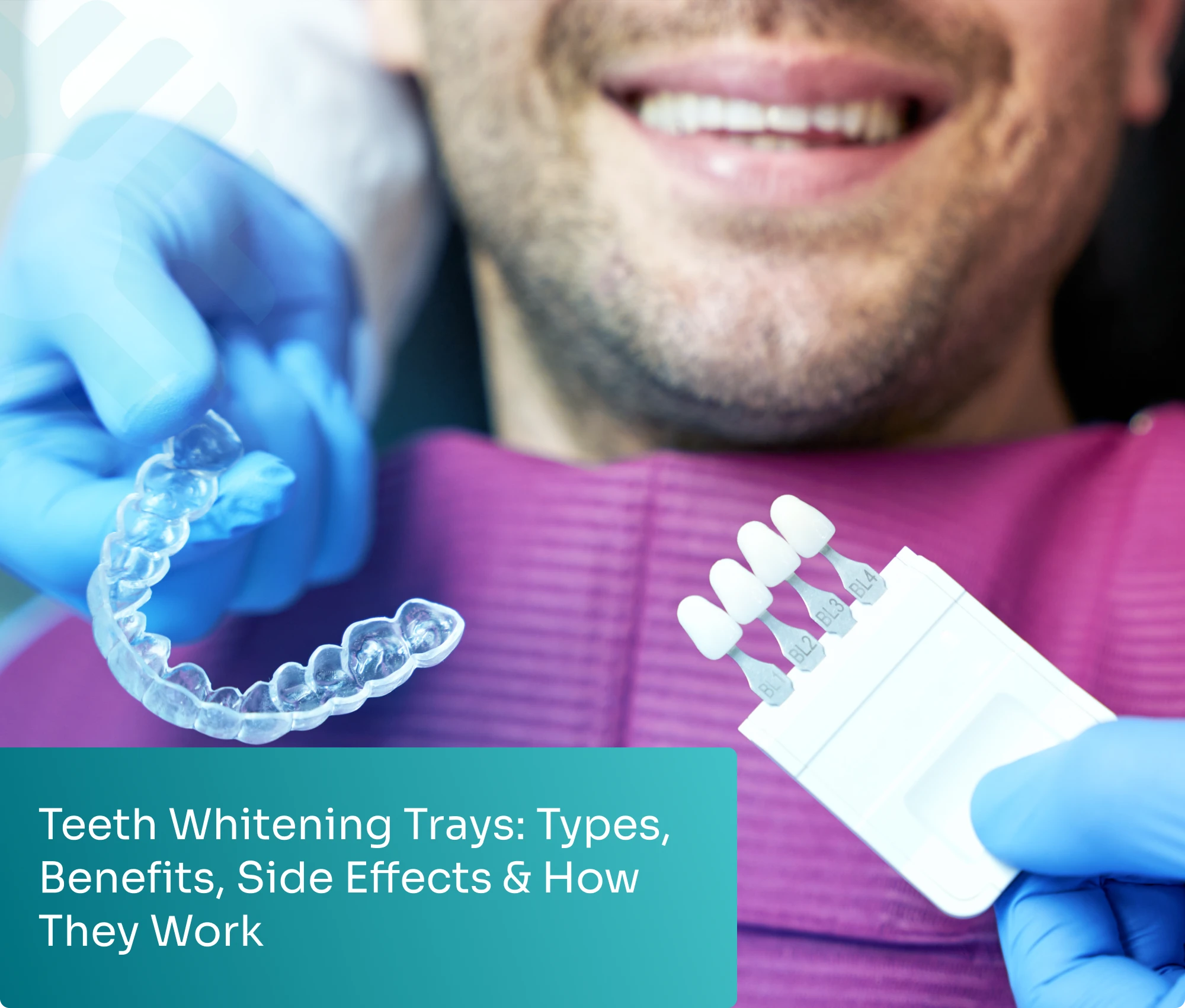
A dentist may prepare custom trays that fit the teeth and prescribe an appropriate whitening product and application schedule.
The trays are then used at home according to the dentist's instructions, making this option suitable for people who prefer gradual whitening rather than a single in-office session.
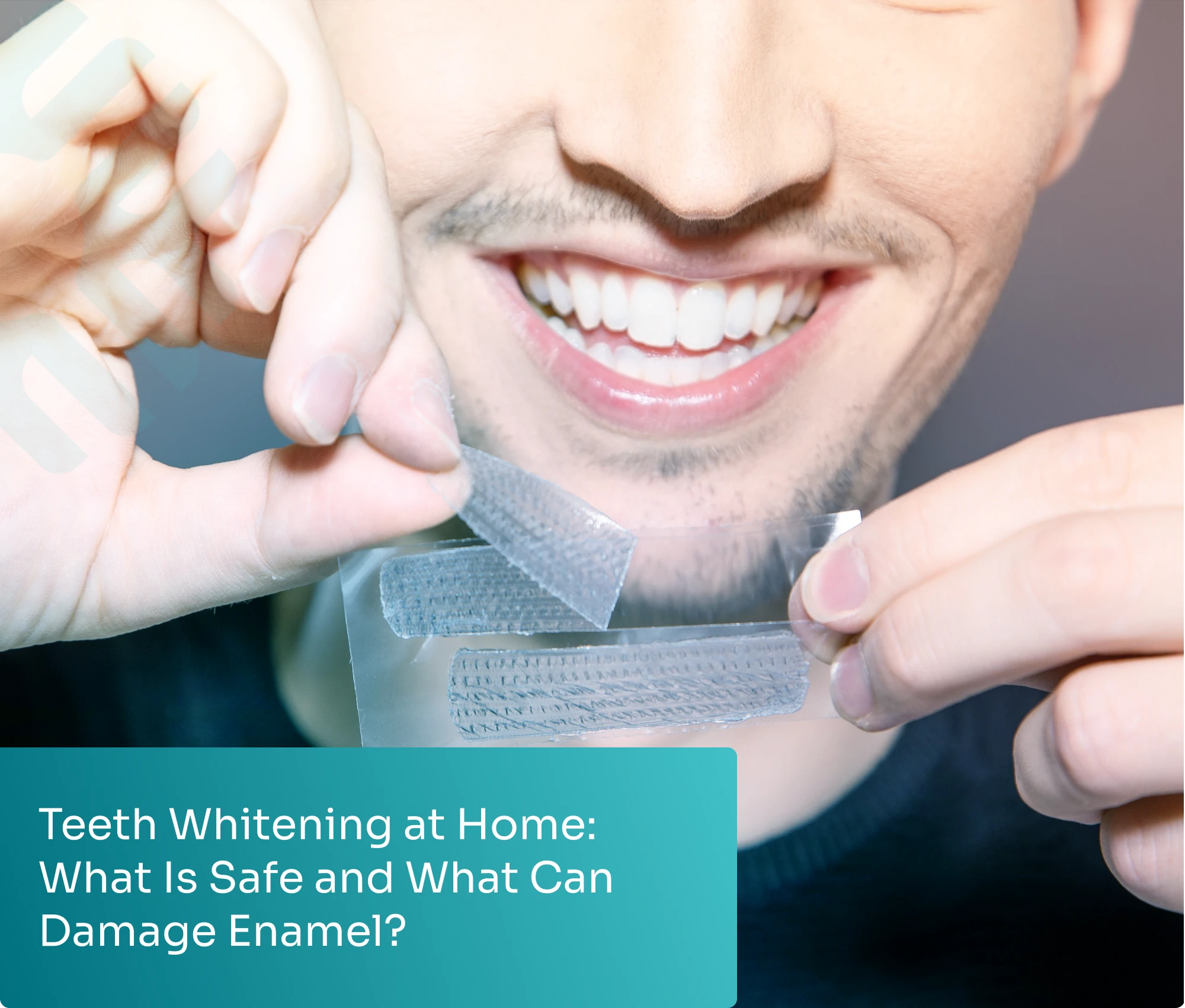
At-home teeth whitening products may include whitening strips, gels, and other over-the-counter products. Concentrations and instructions vary between products, so directions should be followed carefully and application time or frequency should not be increased without professional advice.
Acidic or abrasive home remedies such as lemon or charcoal are not recommended for teeth whitening. These approaches do not have the same evidence for effectiveness and safety and may contribute to enamel wear or increased sensitivity.
Most whitening toothpastes mainly help remove or reduce surface stains. They may improve the appearance of external discoloration but do not change the internal color of teeth in the same way as peroxide-based whitening agents.
If one tooth becomes darker than the surrounding teeth, particularly after trauma or previous root canal treatment, whitening all of the teeth may not be the right approach.
A dentist should first determine why the tooth has changed color. In some cases, internal bleaching of a previously treated tooth or another cosmetic option may be discussed depending on the diagnosis.
The best teeth whitening method depends on your goal and dental condition. In-office whitening may suit someone who wants a faster result under professional supervision, while custom trays may suit someone who prefers gradual treatment at home.
The decision also depends on:
A dental examination is therefore more important than choosing a whitening product based only on its name or marketing claims.
No. Teeth whitening is not suitable for every person or every type of discoloration.
The teeth and gums should be healthy enough for the procedure, and existing dental problems may need treatment first. According to the Saudi Ministry of Health, whitening may not be appropriate in certain situations, including significant gum disease, marked sensitivity, or some visible restorations. It is also generally avoided during pregnancy and breastfeeding and in younger age groups according to professional guidance.
A dentist begins by examining the teeth and gums and identifying the likely cause of discoloration. The result of whitening depends more on the type of stain and the condition of the teeth than on the name of the whitening technique alone.
The assessment may include:
The main benefit of teeth whitening is cosmetic. It aims to lighten the color of natural teeth and reduce the appearance of certain stains.
In suitable cases, whitening may also make the overall tooth color appear more even. However, whitening does not treat cavities or gum disease, and lighter teeth do not necessarily mean healthier teeth. A specific final shade also cannot be guaranteed for every patient.
The most common teeth whitening side effects are tooth sensitivity and gum irritation. Sensitivity may occur with cold, hot, or sweet foods and drinks during or after whitening and is often temporary when whitening is used appropriately.
The likelihood of symptoms may increase with stronger concentrations or excessive use. Whitening products should not be used for longer or more frequently than recommended.
If sensitivity persists or becomes severe, stop using the product and consult a dentist.
For more information about managing sensitivity, read about Tooth Sensitivity Treatment.
When whitening products are used correctly and according to professional or product instructions, medical teeth whitening does not work by removing a layer of enamel.
However, excessive use of whitening products or inappropriate concentrations may damage the enamel or surrounding tissues and increase sensitivity. The Saudi Food and Drug Authority also advises following product instructions carefully, particularly for products containing hydrogen peroxide.
Teeth whitening results are not permanent. How long they last varies according to the whitening method, the original tooth color, daily habits, smoking, and how often staining foods and drinks are consumed.
The NHS notes that whitening results may last for around three years in some people when dental advice is followed. This should not be considered a guaranteed duration for every patient.
To help maintain the result for longer:
There is no single teeth whitening cost that applies to every patient. The final cost can vary according to the whitening method, number of sessions, condition of the teeth and gums, and whether professional cleaning or other dental treatment is needed first.
Costs may also differ between in-office whitening, custom trays, and at-home products. A dental examination helps determine the appropriate treatment plan before the actual cost can be established.
A dental assessment is recommended before whitening, particularly if you have pain, sensitivity, gum inflammation, or a sudden color change in one tooth.
See a dentist before whitening if you have:
Thinking About Teeth Whitening?
If you are considering teeth whitening but are unsure which option is suitable, or if you have sensitivity or restorations on the front teeth, you can book an appointment at Magrabi Health for an assessment of your teeth and gums.
There are several teeth whitening methods, ranging from in-office treatment to custom trays and selected at-home products. Choosing the right method should not depend only on how quickly results appear. The type of discoloration, oral and gum health, tooth sensitivity, and existing restorations all matter. A dental examination before whitening can help identify a suitable option and reduce unnecessary or excessive use of whitening products.
Medically reviewed by Dr. Ahmed El Tokey.
Medical Disclaimer: The information in this article is for health education purposes only and does not replace a visit to a doctor or consultation with a qualified specialist. Magrabi doctors recommend seeking medical evaluation for an accurate diagnosis and appropriate treatment plan.

The Magrabi Health Editorial Team creates educational medical content designed to help readers better understand symptoms, diagnostic tests, treatment options, and preventive healthcare measures across a wide range of medical topics, drawing on trusted sources and specialized clinical expertise. Since 1955, Magrabi Health has built more than 70 years of experience in specialized healthcare through a regional network of over 40 facilities across 5 countries. Its commitment to quality and patient safety is reflected in numerous accreditations and recognitions, including the designation of several eye centers as Centers of Excellence in Ophthalmology by the Surgical Review Corporation (SRC). This content is intended for educational purposes only and should not be considered a substitute for professional medical advice, diagnosis, or treatment.
There is no single best type for everyone. The right option depends on the type of discoloration, oral and gum health, tooth sensitivity, visible restorations, and how quickly a result is desired. A dentist can recommend the most appropriate method after examining the teeth.
Teeth whitening is generally considered safe when an appropriate product or professional treatment is used correctly. Safety depends on the condition of the teeth and gums, the concentration of the whitening agent, and how often it is used. A dental assessment is particularly important if you have sensitivity, cavities, or gum problems.
Yes. Temporary sensitivity can occur during or after whitening and is one of the most common side effects. Its severity may depend on the condition of the teeth, the concentration of the whitening agent, and application time. See a dentist if sensitivity is severe or does not improve.
Correctly used whitening treatment does not require removal of a layer of enamel. However, excessive use or inappropriate concentrations may increase tooth sensitivity, irritate the gums, and potentially damage dental tissues.
No. Whitening agents do not change the color of fillings, crowns, and veneers in the same way they lighten natural teeth. A dentist should assess visible restorations before whitening to reduce the risk of an uneven color result.
The duration varies according to the whitening method and daily habits. Smoking and frequent consumption of coffee, tea, and other staining drinks may cause discoloration to return sooner, while good oral care can help preserve the result for longer.