- Saudi Arabia
- Egypt
- Qatar
- United Arab Emirates
October 28, 2026
Share


Last updated: 28/10/2026
Cosmetic dentistry includes a range of procedures designed to improve tooth color, shape, alignment, and overall smile harmony while preserving oral health and dental function as much as possible. The main types of cosmetic dentistry include teeth whitening, veneers, cosmetic fillings, orthodontics, gum contouring, and tooth reshaping in selected cases.
There is no single procedure that suits everyone. The concern may involve tooth color, tooth shape, alignment, a small fracture, or a missing tooth. Choosing between cosmetic dentistry options therefore starts with examining the teeth and gums and identifying the cause of the concern and the goal of treatment.
Have questions about cosmetic dentistry options? Contact the Magrabi Health team on WhatsApp to ask which service or next step may be appropriate before your visit. Contact us on WhatsApp
The most common types of cosmetic dentistry include teeth whitening, veneers, cosmetic fillings, orthodontics, gum contouring, crowns and restorations, and dental implants when a tooth is missing. The most suitable option depends on the concern: whitening focuses on color, orthodontics addresses tooth position, while veneers or cosmetic fillings may improve shape in selected cases.
If you want to understand the available options for improving tooth color, shape, or harmony, visit the Magrabi Health cosmetic dentistry service page to learn how the condition is assessed and which treatments may be discussed. Explore Cosmetic Dentistry at Magrabi Health
Cosmetic dentistry focuses on improving the appearance of the smile in terms of color, shape, and balance. Depending on the condition of the teeth, cosmetic dental treatments may include both cosmetic and restorative procedures, such as whitening, veneers, tooth-colored fillings, and reshaping of selected teeth or gum tissue.
Cosmetic dentistry procedures do not always involve surgery. Some options are non-surgical, while others require tooth preparation or a surgical procedure. The level of intervention depends on the problem being treated and the individual treatment plan.
|
Main concern |
Option a dentist may discuss |
What it targets |
May tooth preparation be needed? |
|
Tooth discoloration |
Teeth whitening |
Color improvement |
Usually no |
|
Small chip or gap |
Cosmetic fillings / bonding |
Shape and tooth structure |
May be limited |
|
Color and shape concern |
Veneers |
Color and shape |
Depends on the case |
|
Crowding or misalignment |
Orthodontics |
Alignment and bite |
Does not require tooth shaving for this purpose |
|
Uneven gum line |
Gum contouring |
Gum line and smile harmony |
Depends on the procedure |
|
Weak or damaged tooth |
Crown or another restoration |
Protection and shape |
Often requires preparation |
|
Missing tooth |
Implant or prosthetic restoration |
Restores tooth, appearance, and function |
Depends on treatment |
This table is for general guidance only and does not determine the appropriate treatment by itself.
The decision depends on examination of the teeth and gums, the bite, enamel condition, and any existing restorations.
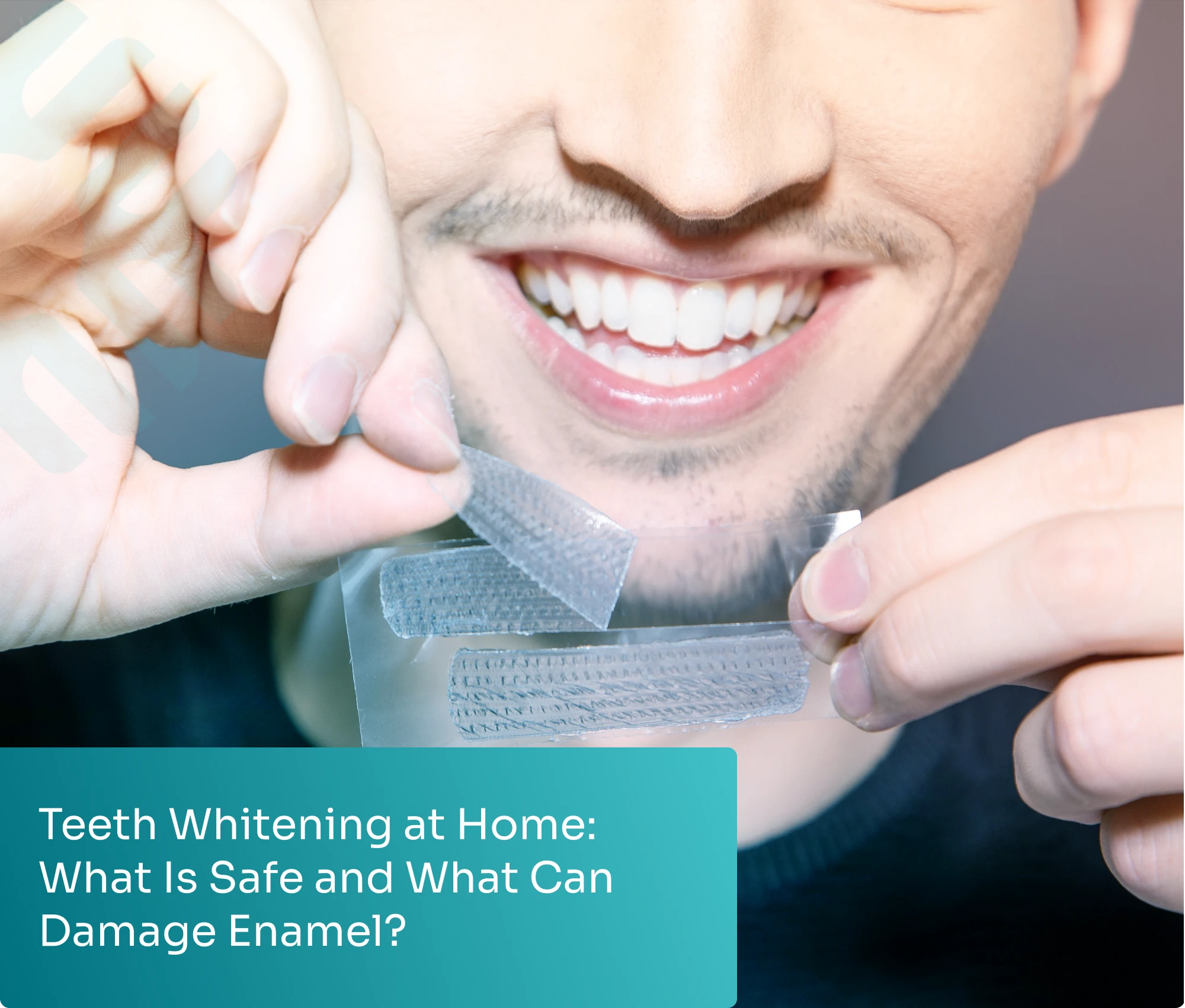
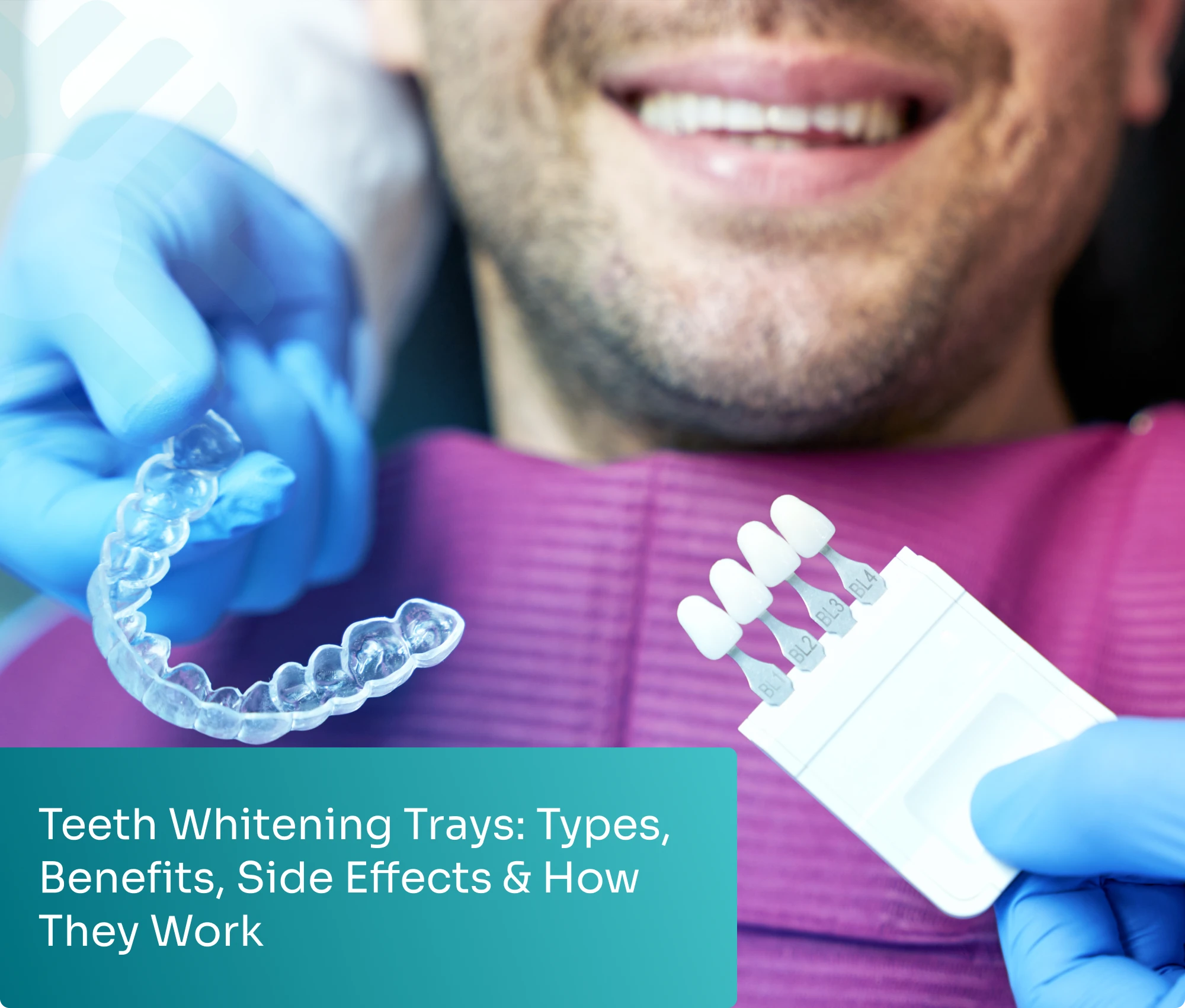
Teeth whitening aims to lighten the natural shade of the teeth and reduce certain types of discoloration. It may be performed in the dental clinic or with dentist-supervised home methods, depending on the case. Fillings, crowns, and veneers do not respond to whitening agents in the same way as natural teeth.
May suit: people whose main concern is discoloration of natural teeth.
May not be the first option if: the main concern is tooth shape or there are visible front restorations whose shade needs to be considered in the overall plan.
Read more about teeth whitening. For in-office approaches, the same guide also explains light- or laser-assisted whitening options.
Veneers are thin shells placed over the front surface of a tooth to improve selected concerns related to shape, color, or symmetry. They may be discussed in selected cases involving changes in tooth shape, discoloration, or small gaps after the health of the teeth, gums, and bite has been assessed.
May suit: selected cases that require a combined change in tooth color and shape.
May not be the first option if: the only concern is color and a more conservative option could achieve the goal, or when an active dental problem needs treatment first.
Learn more about dental veneers.
Tooth-colored filling materials can restore a damaged area or improve the shape of a tooth in selected cases. They may be suitable for small chips, limited gaps, or minor differences in tooth shape. The dentist decides whether this option is appropriate based on the amount of healthy tooth structure, the location of the tooth, and biting forces.
May suit: a small chip, a limited gap, or a restoration that needs to match the surrounding tooth color.
May not be the first option if: the damage is extensive or the tooth requires another type of restoration.
Read more about types of dental fillings.
If the main concern is crowding, gaps, or irregular tooth position, orthodontic treatment may be part of the plan instead of covering the problem with another cosmetic procedure. A dentist or orthodontist assesses tooth alignment and the bite before recommending treatment.
May suit: cases where tooth alignment or the bite is a major part of the concern.
May not be enough on its own if: there is also a separate concern with tooth color or shape that needs assessment after alignment has been corrected.
When a tooth is missing, dental implants, bridges, or other restorations may form part of a plan to restore the appearance of the smile. They also aim to restore function. The choice depends on the remaining teeth, bone and gum condition, bite, and general health.
May suit: replacing a missing tooth or restoring a tooth that cannot be managed with a simpler option.
The decision is not cosmetic only: function and the health of the surrounding tissues are also central to treatment planning.
The shape or symmetry of the gum line can influence the appearance of the smile. In selected cases, the dentist may discuss gum treatment or reshaping after confirming that the gums are healthy and there is no inflammation or other condition that should be treated first.
May suit: selected cases with an uneven gum line.
May not begin as a cosmetic procedure if: the gums are inflamed or require periodontal treatment first.
Professional polishing can help remove some surface staining and deposits and improve the smoothness of the tooth surface. It is different from whitening, which aims to change the natural shade of the teeth. A dentist determines when polishing or professional cleaning is appropriate as part of oral care.
Learn more about professional cleaning and related care through General Dentistry at Magrabi Health.
Cosmetic dentistry for front teeth often focuses on color, shape, length, alignment, and spaces between the teeth because these teeth are highly visible when speaking or smiling. Options may include whitening, veneers, cosmetic fillings, orthodontics, and limited tooth reshaping in selected cases.
Veneers may be used to improve color, shape, or small gaps when the teeth and gums are suitable for treatment. The need for tooth preparation, and the amount of preparation, cannot be determined from the procedure name alone because it depends on the veneer type, tooth position, enamel, and treatment plan.
If the main concern is discoloration and there is no significant problem with tooth shape or structure, a dentist may discuss whitening before considering more invasive restorative options.
Tooth-colored materials may help restore a small chip, modify part of a tooth, or close a small gap in selected cases. The decision depends on the size and location of the concern and the forces placed on the tooth during biting.
In limited cases, a dentist may remove a small amount of enamel to smooth an uneven edge or make a minor adjustment to tooth shape. Because enamel removal is irreversible, the procedure should only be considered after careful assessment of tooth structure and the bite, and it should not be used as a general solution for every cosmetic concern.
Yes. Cosmetic dentistry without shaving teeth may be possible in some cases. Options may include teeth whitening, orthodontics, selected cosmetic fillings, and certain veneer approaches when the tooth position and enamel allow it. However, “no-prep” or “without shaving” does not mean that the option is suitable for everyone.
A dentist may need to prepare part of the tooth when a restoration requires space or when tooth shape or position must be adjusted to achieve an appropriate functional and cosmetic result. The amount of preparation varies from one case to another, so there is no single rule that applies to every veneer or crown.
Cosmetic dental treatments do not always begin with the cosmetic procedure itself. A dentist may first need to treat a problem that affects the health of the teeth or gums or could reduce the success of the cosmetic plan.
After active problems have been managed, the dentist can discuss cosmetic dentistry procedures more clearly while prioritizing oral health and preserving natural tooth structure whenever possible.
Treatment planning begins with diagnosis rather than selecting a procedure first. The dentist assesses the teeth and gums, tooth shape and alignment, the bite, the amount of healthy enamel, existing restorations, and the result the patient hopes to achieve.
Dental X-rays or additional tests may be requested when they are needed to assess roots, bone, teeth, or a specific treatment plan. They are not required in the same way for every person or every cosmetic dentistry procedure.
The best cosmetic dentistry option varies from person to person. The appropriate choice depends on the main concern, oral health, tooth structure, and the bite rather than on choosing the most extensive procedure.
A dentist may combine more than one procedure when more than one concern is present. The goal is to choose a plan that fits the case rather than to perform the greatest number of procedures.
No. The term cosmetic dentistry procedures covers many different treatments, and many are non-surgical. Whitening, cosmetic fillings, and certain reshaping procedures are not traditional surgeries, while some periodontal procedures or dental implant treatment may involve surgery.
How long results last depends on the procedure, the materials used, oral health, and daily habits. Regular care can help protect natural teeth and restorations and reduce the likelihood of new dental problems.
To explore the wider range of oral and dental care available, visit Magrabi Health Dental Services.
If you are considering cosmetic dentistry and want to understand which option may suit you, start with an assessment of the teeth and gums and discuss the plan with a dentist. Call Magrabi Health on 920018000 to book an appointment or ask about the appropriate branch.
The main types of cosmetic dentistry range from whitening and cosmetic fillings to veneers, orthodontics, gum contouring, and tooth reshaping. The right procedure depends not only on the desired appearance but also on the health of the teeth and gums, the amount of healthy tooth structure, and the bite. A dental examination helps identify an appropriate option and avoid unnecessary or overly invasive treatment.
Medically reviewed by Dr. Ahmed El Tokey.
Medical Disclaimer: The information in this article is for health education purposes only and does not replace a visit to a doctor or consultation with a qualified specialist. Magrabi Health doctors recommend seeking dental evaluation for an accurate assessment and an appropriate treatment plan.

The Magrabi Health Editorial Team creates educational medical content designed to help readers better understand symptoms, diagnostic tests, treatment options, and preventive healthcare measures across a wide range of medical topics, drawing on trusted sources and specialized clinical expertise. Since 1955, Magrabi Health has built more than 70 years of experience in specialized healthcare through a regional network of over 40 facilities across 5 countries. Its commitment to quality and patient safety is reflected in numerous accreditations and recognitions, including the designation of several eye centers as Centers of Excellence in Ophthalmology by the Surgical Review Corporation (SRC). This content is intended for educational purposes only and should not be considered a substitute for professional medical advice, diagnosis, or treatment.
Types of cosmetic dentistry include teeth whitening, veneers, cosmetic fillings, orthodontics, gum contouring, and tooth reshaping, as well as restorative options such as crowns or dental implants when needed. The choice depends on the concern, oral health, tooth structure, and bite.
There is no single best cosmetic dentistry option for everyone. Whitening may suit some color concerns, while problems involving shape, chips, alignment, or missing teeth require different cosmetic dentistry options selected after dental assessment.
Yes. Some procedures, such as whitening, orthodontics, and selected cosmetic fillings, may not require tooth shaving. Some veneers may also require little or no preparation in selected cases, but suitability depends on tooth position, enamel thickness, and the bite.
If the main concern is the color of natural teeth and their shape is suitable, whitening may be discussed first. If the concern also involves shape, small chips, or gaps, the dentist may discuss veneers, cosmetic bonding, or another option depending on the case.
Cosmetic dentistry for front teeth may include whitening, veneers, cosmetic fillings, orthodontics, and limited tooth reshaping when appropriate. The dentist chooses the option based on color, shape, alignment, and the health of the teeth and gums.
Cost varies according to the procedure, number of teeth, materials used, complexity of the case, and whether decay, gum disease, or another condition needs treatment before cosmetic work. A more accurate cost can be determined after examination and treatment planning.