Services

Eye Care | Glaucoma Treatment

Glaucoma Treatment: From Eye Pressure Testing to Drops, Laser and Surgery

Magrabi Health offers glaucoma testing and treatment, from eye pressure checks to drops, laser and surgery, through its Cataract & Glaucoma Unit. Over the past 70 years, Magrabi Health has provided more than 3.8 million glaucoma treatments and performed more than 200,000 glaucoma surgeries.

Glaucoma is a condition that damages the optic nerve, often linked to high eye pressure, and it can progress for years without pain or obvious vision changes.

At Magrabi Health, care starts with a full assessment of eye pressure, the drainage angle, the optic nerve, OCT and visual field, so your doctor can confirm the diagnosis and decide whether you need monitoring, eye drops, laser or glaucoma surgery.

Want to understand the right next step?

Start with one conversation that guides you to the right doctor, test and branch based on your city and case.

Want to understand the right next step?

Could glaucoma be affecting your eyes?

Glaucoma often has no early symptoms, so many people only find out during a routine eye exam or after being told their eye pressure is high. A high reading alone does not confirm glaucoma, and a glaucoma diagnosis does not always mean surgery.

What is glaucoma?

Understanding the condition

What is glaucoma?

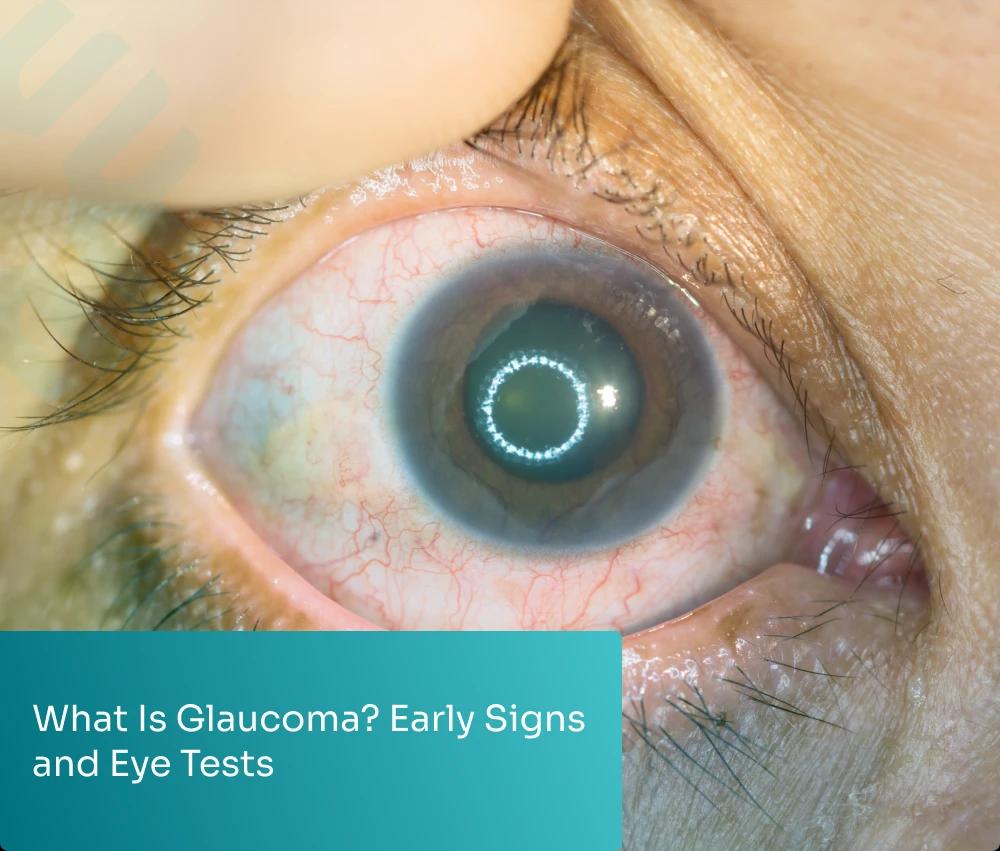
Glaucoma is a group of eye conditions that damage the optic nerve, the cable that carries images from the eye to the brain. The damage is often related to fluid not draining properly from the front of the eye, which raises eye pressure over time. Side vision is usually affected first, which is why many patients do not notice the change until it is advanced. 

The two main types are open-angle glaucoma, which develops slowly and usually without symptoms, and angle-closure glaucoma, where the drainage angle narrows or closes and pressure can rise suddenly. Vision already lost to glaucoma cannot be restored, so the goal of treatment is to lower eye pressure and protect the remaining vision.

Glaucoma symptoms and risk factors

Open-angle glaucoma rarely causes symptoms in the early stages, so testing matters more than waiting for signs. For general awareness, see the Saudi Ministry of Health glaucoma guide.

Possible signs

  • Gradual loss of side (peripheral) vision.
  • Bumping into objects or missing things to the side.
  • Halos around lights (mainly in angle-closure glaucoma).
  • Blurred vision or difficulty adjusting in dim light.
  • In advanced cases, narrowing (“tunnel”) vision.

Factors that may increase risk

  • Age over 40.
  • A family history of glaucoma.
  • High eye pressure on a previous exam.
  • Diabetes.
  • High short-sightedness or long-sightedness.
  • Long-term use of steroid medications, including eye drops.
  • A previous eye injury or eye surgery.

Medical alert Sudden severe eye pain, headache, red eye, blurred vision, halos, nausea or vomiting can be signs of acute angle-closure glaucoma, which needs urgent medical care.

What happens during a glaucoma examination?

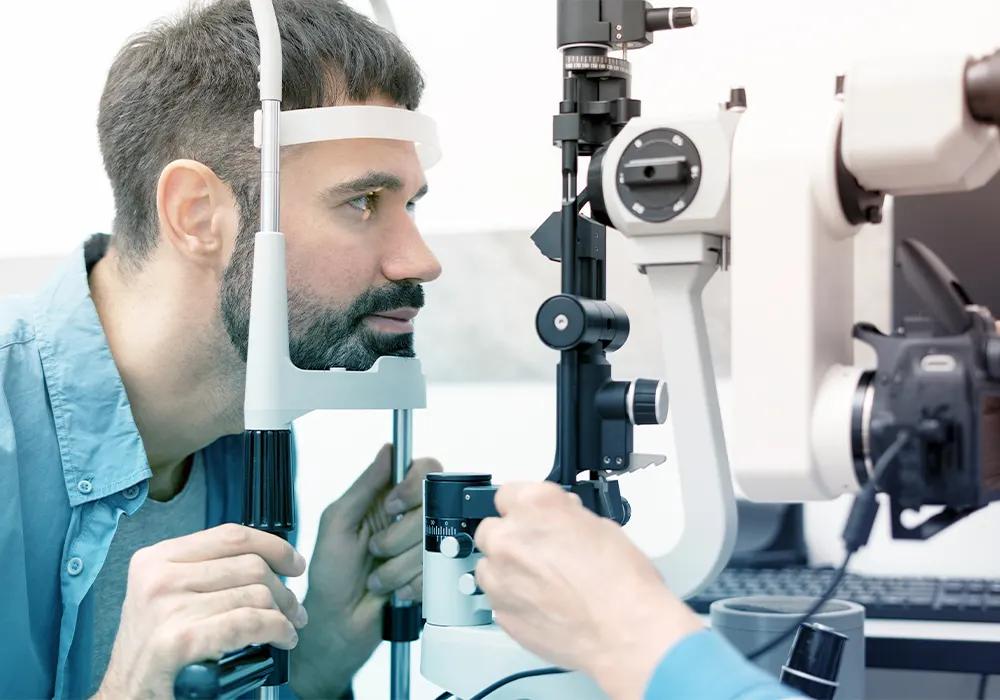
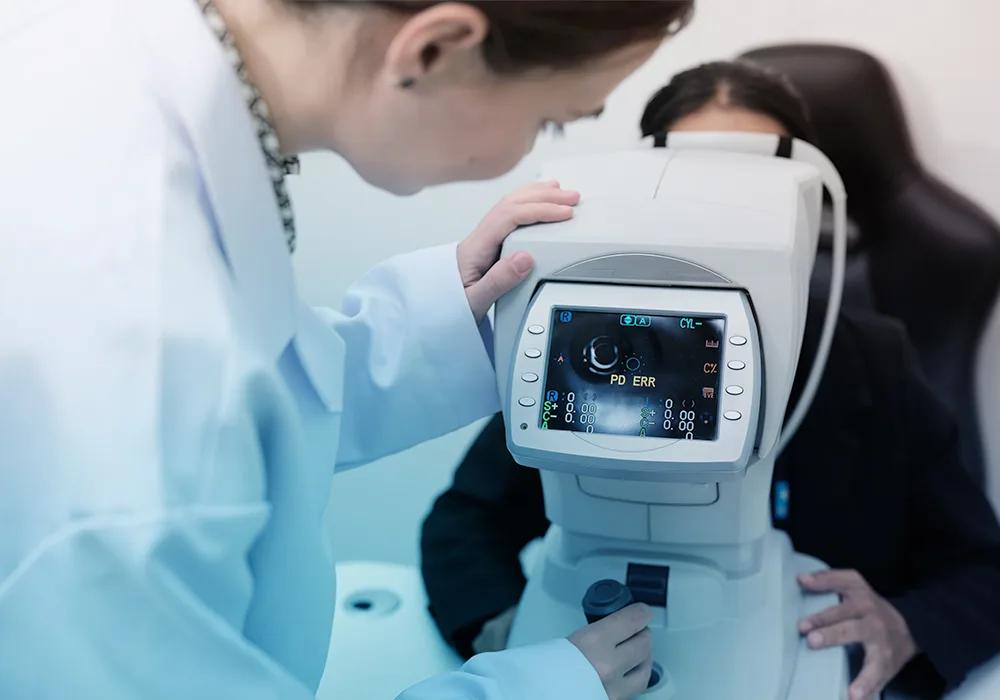
The goal is not only to measure eye pressure, but to find out whether the optic nerve is affected, what type of glaucoma it is, and how fast it is changing. Not every patient needs every test; your doctor decides based on your case.

  1. 1

    Eye pressure

    Eye pressure is measured, and corneal thickness may be checked because it can affect the reading.

  2. 2

    Drainage angle

    The doctor checks if the drainage angle is open or narrow, which defines the type of glaucoma.

  3. 3

    Optic nerve

    The optic nerve is examined for signs of glaucoma damage and compared at later visits.

  4. 4

    OCT scan

    OCT imaging measures the nerve fiber layer to detect early changes and track them over time.

  5. 5

    Visual field test

    This test maps your side vision to see whether glaucoma has affected it and how much.

  6. 6

    A clear plan

    Your doctor explains if you need monitoring, drops, laser or surgery, and when to come back.

When does glaucoma need treatment?

And can glaucoma be cured?

Glaucoma cannot be cured, and vision already lost cannot be restored. It can usually be controlled. Treatment lowers eye pressure to a target level set by your doctor to slow or stop further damage to the optic nerve.

If your pressure is slightly high but the optic nerve and visual field are normal, your doctor may recommend monitoring first. Treatment is started when there are signs of glaucoma damage or a high risk of developing it, and it is adjusted if your results change.

Not sure what your results mean?

If you were told your eye pressure is high, or you already use glaucoma drops, the Magrabi Health team can guide you to the right doctor and branch.

Glaucoma treatment options

There is no single best treatment for everyone. The choice depends on the type of glaucoma, eye pressure, the condition of the optic nerve, how you respond to treatment and other eye conditions.

Eye drops

Drops lower eye pressure by reducing fluid production or improving drainage. They work only when used daily as prescribed, and your doctor may change or combine drops if pressure is not controlled or side effects occur.

Glaucoma laser treatment

Laser can improve drainage in some types of open-angle glaucoma, and a laser opening in the iris can treat or prevent angle-closure. It is usually a short outpatient procedure, but its effect varies and some patients still need drops.

Glaucoma surgery

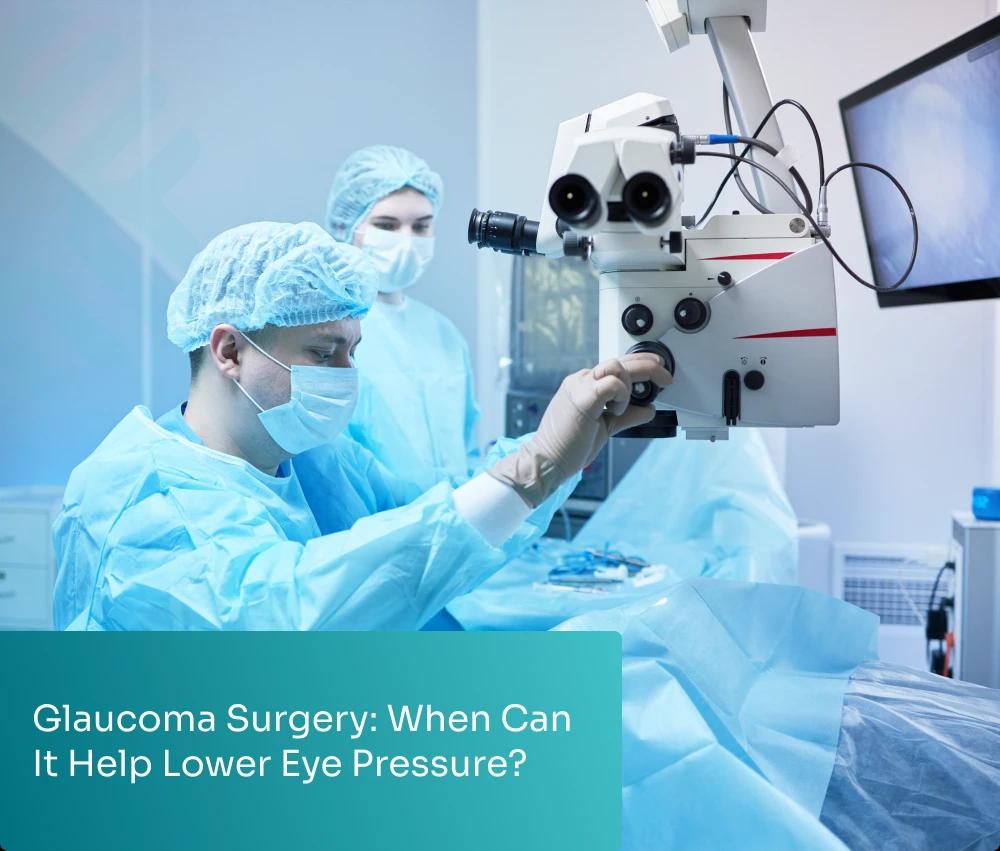
When drops and laser do not control pressure, surgery creates a new drainage route or uses a drainage device. Your doctor selects the technique based on severity and your eye’s condition, and explains the expected benefit and risks.

Glaucoma and cataract together

When both conditions are present, the doctor may plan cataract surgery together with a glaucoma procedure, or treat them in stages. The choice depends on eye pressure, the stage of glaucoma and how much the cataract affects vision.

Note Your doctor confirms the suitable option after the examination.

What can glaucoma treatment achieve?

Possible benefits

Lowering eye pressure to the target level can slow or stop further optic nerve damage and help protect your remaining vision for the long term, especially when glaucoma is found early.

Limits and risks

Treatment does not restore lost vision or usually improve sight. Drops may cause redness or irritation, and laser and surgery carry risks your doctor will discuss before deciding. Pressure can rise again over time, so the plan may need adjusting.

Note Glaucoma is a lifelong condition. Even when pressure is controlled, regular follow-up is part of the treatment.

Follow-up and living with glaucoma

Before your examination

Bring your current glasses, any previous reports or OCT results, and a list of eye drops and medicines you use. Tell the doctor about any family history of glaucoma.

Using your drops correctly

Use drops at the same times every day, wait a few minutes between different drops, and do not stop them without talking to your doctor, even if your vision feels normal.

Regular follow-up

Your doctor sets how often to recheck eye pressure, the optic nerve, OCT and visual field. Keeping these appointments is how changes are caught early, before vision is affected.

When to get help quickly? Seek urgent care for sudden eye pain, a red eye with blurred vision, halos with headache or nausea, or a sudden drop in vision, especially after laser or surgery.

Glaucoma doctors at Magrabi Health

These ophthalmologists work in the Cataract & Glaucoma Unit across Magrabi Health branches and handle glaucoma assessment, treatment and follow-up.

Dr. Abdulrahman AlDarrab

Dr. Abdulrahman AlDarrab

Consultant In Glaucoma And Cataracts

  • Magrabi Health Eye, Dental and ENT Hospital – Riyadh
View Doctor Profile
Dr. Ali Al-Beshri

Dr. Ali Al-Beshri

Cataract & Glaucoma Consultant

  • Magrabi Health Eye, Dental and ENT Hospital – Riyadh
View Doctor Profile
Dr. Laurence (Abdullah) Bunting Brown

Dr. Laurence (Abdullah) Bunting Brown

Cataract And Glaucoma Consultant

  • Magrabi Health Eye & Ear – Al Madina Al Monawara
View Doctor Profile
Dr. Mohamed Eldaly

Dr. Mohamed Eldaly

Consultant Cataract And Glaucoma Unit

  • Magrabi Health Eye and Ear Madina Road - Jeddah
View Doctor Profile
Dr. Hassan Adel

Dr. Hassan Adel

Consultant In Cataract & Glaucoma

  • Magrabi Health Eye and Dental – Makkah
View Doctor Profile
Dr. Ahmed AlHabash

Dr. Ahmed AlHabash

Cataract And Glaucoma Consultant

  • Magrabi Health Eye – Al Khobar
  • Magrabi Health - Eye, Dental, ENT - Al-Ahsa
View Doctor Profile
Dr. Masoud Alqahtani

Dr. Masoud Alqahtani

Cataract, Glaucoma And Refractive Surgeries Consultant

  • Magrabi Health Eye, Dental and ENT – Asir
View Doctor Profile
Dr. Eslam Ramadan

Dr. Eslam Ramadan

Cataract & Glaucoma Unit

  • Magrabi Health Eye, Dental and ENT – Exit 14 – Riyadh
View Doctor Profile
Dr. Galal Swilem

Dr. Galal Swilem

Cataract & Glaucoma Unit

  • Magrabi Health Eye – Al Khobar
  • Magrabi Health - Eye, Dental, ENT - Al-Ahsa
View Doctor Profile
Dr. Mohammad Attwa

Dr. Mohammad Attwa

Cataract & Glaucoma Unit

  • Magrabi Health Eye – North Jeddah
View Doctor Profile
Dr. Karim Ghazal

Dr. Karim Ghazal

Cataract And Glaucoma Unit

  • Magrabi Health Eye – Al Morgan – Jeddah
View Doctor Profile
Dr. Eslam Mahmoud Elhariry

Dr. Eslam Mahmoud Elhariry

Cataract & Glaucoma Unit

  • Magrabi Health Eye, Dental and ENT – Qatif
View Doctor Profile

Need help choosing a doctor?

Send your city and whether you already have a glaucoma or high eye pressure diagnosis, and you will be guided to the right doctor and branch.

Chat on WhatsApp

Where can you get glaucoma testing and treatment?

Glaucoma tests, laser and surgery are available at all Magrabi Health eye branches. Choose your city to see the nearest branch.

Patient experiences with glaucoma care at Magrabi Health

The eye examination experience was clear and organized, and the steps of eye pressure measurement and the required examinations were explained in a reassuring way.

Ghazi Al-Mohammed

4 months ago

The service was good from the beginning of booking until meeting the doctor. The eye was examined carefully, and the doctor explained the importance of following up.

Noura Al-Ali

1 year ago

The visit was helpful, and the team was cooperative in organizing the examinations.

Alaa Mohammed

2 years ago

The doctor and the team were professional and helped me understand the next steps.

Mohammed Daham

5 months ago

Links that may help based on your case

If the cause of your vision problem is not yet clear, or you have another eye condition alongside glaucoma, these pages may help.

Eye examination

If you have not had a full eye check or want a routine glaucoma screening.

Eye examination

Cataract surgery

If you have cataract and glaucoma together and want to understand surgery options.

Cataract surgery

Retina treatment

If you have diabetes or a retinal condition that also needs follow-up.

Retina treatment

Eye services

To explore all Magrabi Health eye specialties.

Eye services

Why choose Magrabi Health for glaucoma care?

Glaucoma care is long term, so choosing where to be treated is about more than one test or procedure. What matters is accurate diagnosis, the right treatment at the right time, and consistent follow-up.

Specialized eye care since 1955

Magrabi Health started as an eye hospital in Jeddah in 1955. For a glaucoma patient, that means care within a network built around ophthalmology.

Full assessment before treatment

Treatment decisions are based on eye pressure, the drainage angle, optic nerve, OCT and visual field, not on one pressure reading.

Drops, laser and surgery

Your plan can move from drops to laser or surgery when needed, with the same unit following your case and adjusting treatment over time.

Glaucoma care close to home

Magrabi Health offers glaucoma assessment and follow-up across its eye branches, so you can keep your regular checkups close to home.

Note Your doctor confirms the suitable option after the examination.

Frequently asked questions about glaucoma treatment

Early open-angle glaucoma usually has no symptoms. Later, side vision is gradually lost. Angle-closure glaucoma can cause sudden eye pain, redness, blurred vision, halos, headache and nausea, which needs emergency care.

Start your glaucoma assessment with one clear step

If you were told your eye pressure is high, have a family history of glaucoma, or already use glaucoma drops, you do not need to choose a treatment yourself. Start with WhatsApp to be guided to the right doctor and branch.

Start your glaucoma assessment with one clear step

Articles related to glaucoma

Read more about specific stages of glaucoma care, from early signs and eye tests to surgery.